
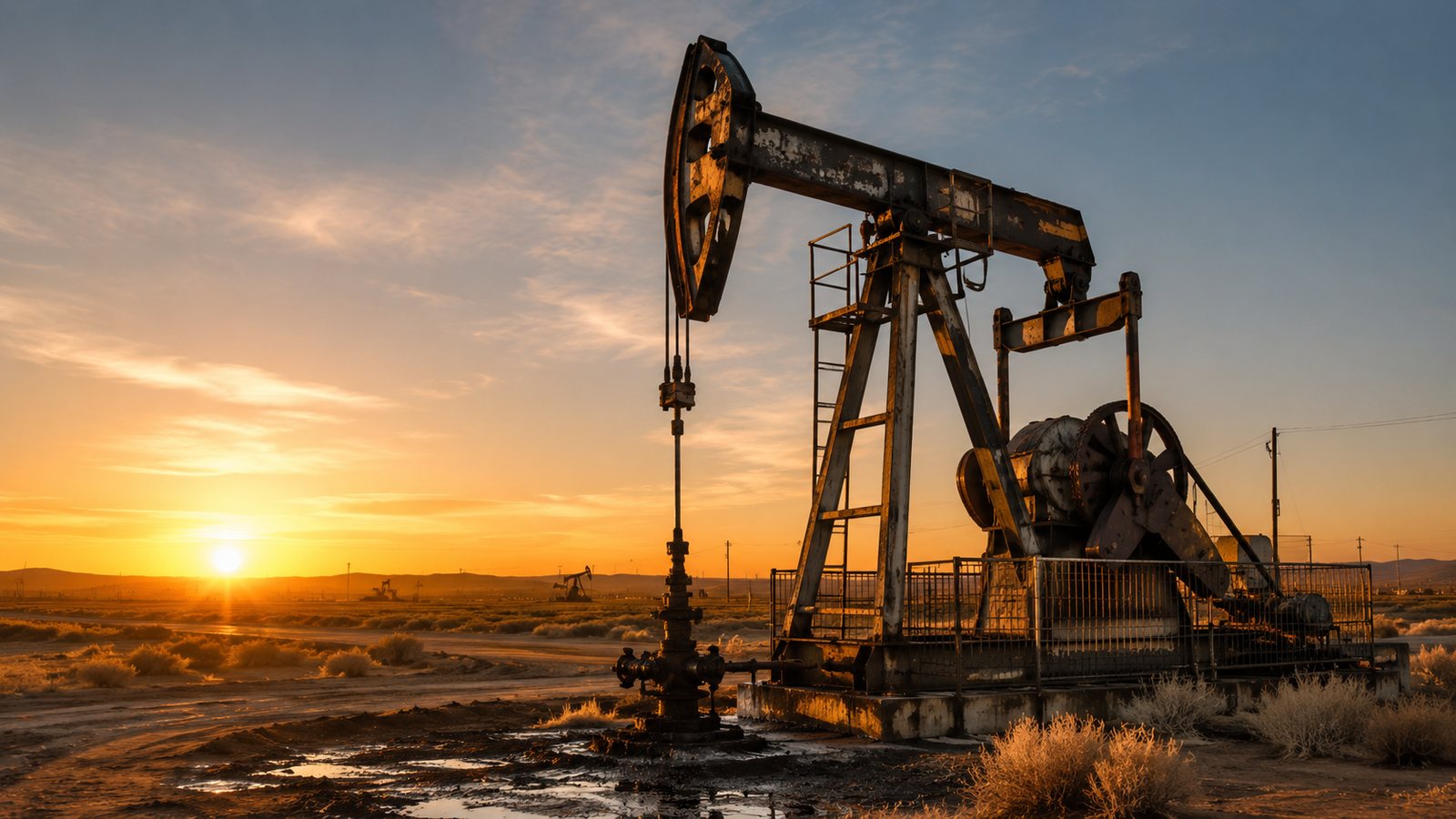
Stripper-Well Output Raised from 1–2 to 15 Barrels/Day
A February 2020 four-well field study in Pecos County, Texas, using JC 9450 ROS chemistry dosed into the well casing.
Stripper-well output rose from 1 to 2 barrels per day to 15 barrels per day in a February 2020 four-well field study in Pecos County, Texas, using JC 9450 dosed into the well casing at 5 gallons per day for under $100 per day. H2S, iron, and bacteria were eliminated.
Last updated 26 September 2026
The Problem
What was the stripper-well problem?
A stripper well is a marginal oil or gas well averaging 15 barrels per day or less — and typically producing just 1 to 2. The National Stripper Well Association counts more than 770,000 of them in the U.S., accounting for 11.3% of domestic oil and 8.3% of gas. Yet 50 to 70% of the oil beneath them is considered unrecoverable due to pressure, permeability, and paraffin problems.
These wells are also plagued by H₂S, iron sulfide, biofilm, and bacteria that foul the formation and the produced water — and conventional stimulation is slow and expensive.
The Program
How did Jenfitch treat the wells?
JC 9450 releases reactive oxygen species that react with H₂S, iron sulfide, biofilm, and bacteria; it also acts as an emulsion breaker and micro-flocculant for produced water and destabilizes paraffin and asphaltene. In the Pecos County study it was dosed directly into the well casing.
- 5 gallons/day of JC 9450 into the casing across a four-well field study (February 2020).
- Output climbed from 1–2 bbl/day to 15 bbl/day — roughly 15 barrels produced per 12 hours — for less than $100/day.
- H₂S eliminated in both the gas and liquid phases; produced water showed no detectable iron, bacteria, or H₂S.
- In a June 2016 side-by-side stimulation, the treated well was cleaned up in 4 hours versus the 4–7 days a conventional job takes.
The Data
What were the results?
| Metric | Well 10 — JC 9450 | Well 12 — Control |
|---|---|---|
| Estimated output (bbl/day) | 33.5 | 19.5 |
| Output gain | +72% | — |
| Treatment time | 4 hours | 4–7 days |
| Material cost | $9,600 | $11,100 |
| Bottle test (bacteria, CFU) | <1,000 | <10,000 |
More oil, faster, for less
The JC 9450 well produced an estimated 33.5 bbl/day against the control's 19.5 — a 72% gain — and did it in 4 hours instead of 4–7 days, at lower material cost and with cleaner produced water.
Documentation
Read the full study
Related: Oil & Gas research · Mineral Oxychloride Technology
Frequently Asked Questions
About this stripper-well study.
What is a stripper well?
A stripper well is a marginal oil or gas well averaging 15 barrels per day or less, typically producing just 1 to 2. The U.S. has more than 770,000 of them, accounting for 11.3% of domestic oil and 8.3% of gas.
How was JC 9450 applied and what did it cost?
In the Pecos County field study, 5 gallons/day of JC 9450 was dosed into the well casing. Output rose from 1–2 to 15 bbl/day for less than $100/day in treatment cost. The four-well study ran in February 2020 in Texas, and 15 barrels represents roughly what these wells produced per 12 hours. A stripper well is a marginal well averaging 15 barrels per day or less.
How does it compare to conventional stimulation?
In a side-by-side, the JC 9450 well produced an estimated 33.5 bbl/day versus 19.5 for the control (+72%), was treated in 4 hours versus 4–7 days, and cost $9,600 in materials versus $11,100. That June 2016 comparison put Well 10 on JC 9450 against Well 12 on a conventional job, so the difference in output, cleanup time, and materials cost came from the same field under the same conditions.
What happens to H₂S and produced water?
H₂S was eliminated in both gas and liquid phases, and the produced water showed no detectable iron, bacteria, or H₂S. JC 9450 also breaks emulsions and destabilizes paraffin and asphaltene. Its reactive oxygen species react with hydrogen sulfide, iron sulfide, biofilm, and bacteria, the same foulants that plague marginal wells, and it acts as a micro-flocculant for produced water, so the formation and the water are treated together.