When to specify JC 9465
Choose it where the program makes pesticidal claims, such as disinfection, algae or biofilm control, or where the operation is certified organic, including post-harvest wash water. Its label governs uses and rates.

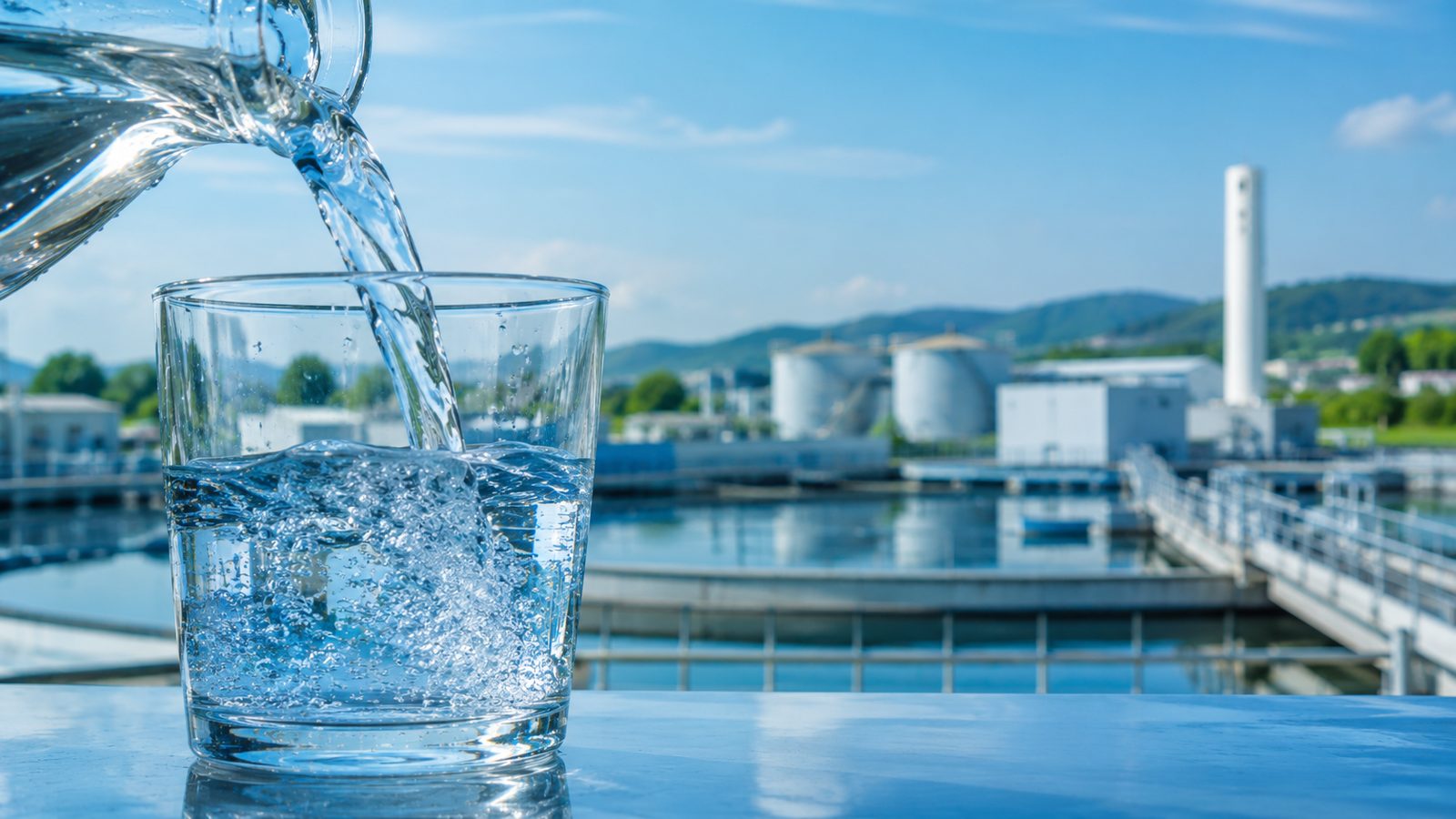
Three approvals, three different questions. Here is who issues each one, what it covers, what it does not, and which apply to JC 9465 and JC 9450.
EPA FIFRA registration lets a product make pesticidal claims on an approved label, and use must follow that label. NSF/ANSI/CAN 60 certifies that a chemical can be added to drinking water up to a maximum use level; it does not test efficacy. USDA NOP status means an input is allowed in certified organic operations. JC 9465 holds all three; JC 9450 is NSF/ANSI/CAN 60 certified.
Approved, certified & independently validated
 EPA FIFRA
 USDA NOP
 NSF/ANSI
Side by Side
Short answer: they answer three different questions. FIFRA registration lets a product make pesticidal claims, such as killing bacteria or algae, on an EPA-approved label. NSF/ANSI/CAN 60 certification says a chemical can be added to drinking water up to a maximum use level without unacceptable health effects. USDA NOP status says an input may be used in a certified organic operation.
| Question | EPA FIFRA registration | NSF/ANSI/CAN 60 certification | USDA NOP organic allowance |
|---|---|---|---|
| Who issues it | U.S. EPA Office of Pesticide Programs | An accredited certifier such as NSF, against an American and Canadian national standard | USDA sets the rules; input reviewers such as WSDA or OMRI and the operation’s certifier apply them |
| Legal basis | Federal Insecticide, Fungicide, and Rodenticide Act | Voluntary standard, made mandatory by most U.S. states and Canadian provinces for public water systems | Organic Foods Production Act; regulations at 7 CFR Part 205, including the National List |
| What it covers | Pesticidal claims, efficacy data, hazard warnings, and the uses, rates and directions printed on the label | Health effects of the chemical and its contaminants in drinking water, up to a stated maximum use level | Whether a material may be used in organic crop production or handling, and under what annotation |
| What it does not mean | Not an endorsement of uses missing from the label | Not a test of efficacy; not approval above the maximum use level | Not “certified organic”; farms and handlers are certified, inputs are allowed |
| How buyers verify | EPA Pesticide Product Label System, or the label itself | The manufacturer’s page in the NSF listings | WSDA Organic Input Material List, OMRI Products List, or your certifier |
| Ongoing oversight | Label changes need EPA approval before use | Annual facility audits and periodic product retesting | Annual renewal of input listings; annual inspection of certified operations |
EPA FIFRA
It is EPA’s license to sell a pesticide in the United States, and it covers only what the approved label says. Disinfectants, sanitizers, algaecides and biocides are pesticides under FIFRA. Before registering one, EPA requires data on health and environmental effects and reviews efficacy claims, then turns its findings into label conditions and directions.
That makes the label the working document. Every pesticide label carries the statement that it is a violation of federal law to use the product in a manner inconsistent with its labeling. A use that does not appear on the label is not covered, however well the chemistry might perform there. Read more in what FIFRA registration means for JC 9465.
It does not certify a product for addition to drinking water. NSF reports that FIFRA registration is not a prerequisite for NSF/ANSI/CAN 60, and the reverse is also true. Chemicals such as sodium hypochlorite and copper sulfate used in drinking water typically need both.
NSF/ANSI/CAN 60
It means the chemical has been evaluated for health effects when added to drinking water at or below its maximum use level. The standard covers treatment, storage and distribution chemicals: coagulants, oxidants, pH adjusters, corrosion inhibitors, algaecides and more. Testing looks at regulated metals, radionuclides, volatile and semi-volatile organics, and other contaminants the formulation could contribute, normalized to the maximum dose.
Two limits matter to buyers. First, the standard addresses human health effects only; it does not test whether the product works. Second, the certification applies at or below the maximum use level shown on the listing, for the functions listed. A utility should read the listing, not just the certification mark. The NSF 60 reservoir algaecide guide walks through a real listing.
USDA NOP
USDA certifies operations, not input chemicals. A farm or packing house earns organic certification from a USDA-accredited certifier. An input such as a sanitizer is either allowed or not allowed for use in that operation, based on the National List at 7 CFR 205.601–205.606 and any annotation that limits how it may be used.
Because certifiers cannot review every product from scratch, independent material reviewers evaluate formulated products against the National List. The Washington State Department of Agriculture Organic Program reviews and registers input materials for use in organic production under USDA standards and publishes them on its Organic Input Material List; registered products must be used according to any noted annotations. OMRI runs a separate review and publishes the OMRI Products List. Either way, the operation lists each input in its organic system plan and checks with its certifier before using a new material.
The accurate phrasing for an input is “allowed for organic production under USDA NOP.” Describing an input as holding its own organic certification misstates how the program works. The organic post-harvest wash guide shows how this works for wash-water sanitizers.
Jenfitch Products
Short answer: JC 9465 is EPA FIFRA registered, NSF/ANSI/CAN 60 certified, and allowed for organic production under USDA NOP (WSDA-listed). JC 9450, the same mineral oxychloride chemistry, is NSF/ANSI/CAN 60 certified.
| Approval | JC 9465 | JC 9450 | Where to verify |
|---|---|---|---|
| EPA FIFRA registration | EPA FIFRA registered | — | Product label; EPA Pesticide Product Label System |
| NSF/ANSI/CAN 60 | NSF/ANSI/CAN 60 certified | NSF/ANSI/CAN 60 certified | NSF listing for Jenfitch, Inc. |
| NSF maximum use level | 84 mg/L or 52 mg/L by producing facility | 84 mg/L or 52 mg/L by producing facility | NSF listing for Jenfitch, Inc. |
| USDA NOP | Allowed for organic production under USDA NOP (WSDA-listed) | — | WSDA Organic Input Material List |
Choose it where the program makes pesticidal claims, such as disinfection, algae or biofilm control, or where the operation is certified organic, including post-harvest wash water. Its label governs uses and rates.
Jenfitch supplies JC 9450 for municipal and technical water service where the requirement is NSF/ANSI/CAN 60 certification for drinking-water treatment, such as incoming and ice-making water in a food plant.
Verification
Short answer: go to the issuing body’s own list rather than a supplier’s badge. Each one publishes a searchable record, and each record shows limits a badge leaves out.
Search the product name in EPA’s Pesticide Product Label System and compare the approved label with the label on the container. Check that your intended use appears on it.
Open the NSF listing and confirm the trade name, the function you need, the producing facility, and the maximum use level.
Check the WSDA Organic Input Material List for the brand and any annotation, then confirm with your certifier and add the input to your organic system plan.
Request the current JC 9465 label and SDS from Jenfitch and keep both on file with your certificate records.
EPA’s position is that pesticide use must follow the label. Registration status, NSF certification and organic allowance all sit underneath that rule: none of them authorizes a use, rate or site the JC 9465 label does not list.
Frequently Asked Questions
No. NSF reports that FIFRA registration is not a prerequisite for NSF/ANSI/CAN 60 certification, and NSF certification is not a prerequisite for registration. They cover different questions: FIFRA covers pesticidal claims and label directions, while NSF/ANSI/CAN 60 covers health effects of adding a chemical to drinking water. A disinfectant or algaecide used in a public water system typically needs both.
Not in the way a farm can. USDA-accredited certifiers certify operations such as farms and handlers. Inputs are allowed or not allowed under the National List at 7 CFR Part 205, and material reviewers such as WSDA and OMRI evaluate formulated products. The accurate phrase for an input is allowed for organic production under USDA NOP, which is how JC 9465 is described.
JC 9450 is NSF/ANSI/CAN 60 certified for drinking-water treatment. The EPA FIFRA registration and the USDA NOP organic allowance belong to JC 9465, which is the same mineral oxychloride chemistry. Where a program needs pesticidal claims or organic allowance, such as post-harvest wash water in a certified organic packing house, specify JC 9465 and follow its label.
On the product label, which is the legal document for any pesticide. EPA's Pesticide Product Label System also holds approved labels. Jenfitch provides the current label and SDS on request through the contact page. Keep both on file, and check that each intended use and rate appears on the label before you apply the product.
NSF certifies products by the facility that makes them. The Jenfitch listing shows a maximum use level of 84 mg/L for JC 9465 and JC 9450 from one facility and 52 mg/L from the other. A utility should confirm which facility supplied its product and treat that number as the ceiling for drinking-water dosing.
NSF reports that most U.S. states and Canadian provinces require NSF/ANSI/CAN 60 certification for chemicals added to public drinking water. If the product is used for a pesticidal purpose such as disinfection or algae control, EPA FIFRA registration and the label also apply. Confirm the exact requirement with your state drinking-water program before a trial.