

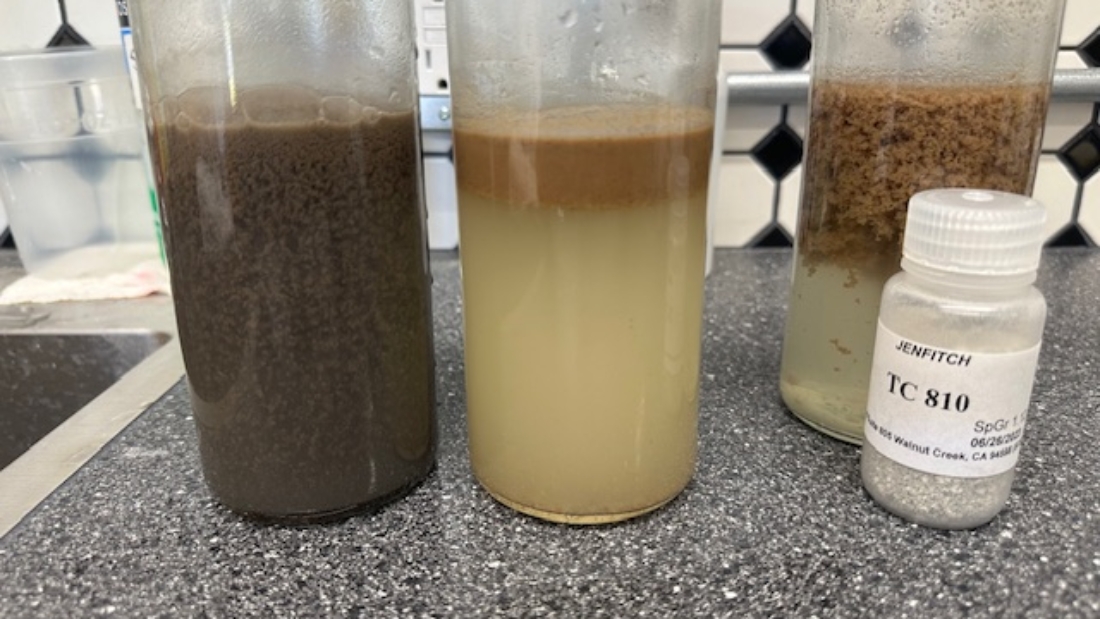
IMG_0864

Eliminating Filamentous Particle with JC-9465

Sludge bulking remains one of the most persistent challenges in small and mid-sized wastewater treatment facilities, particularly during seasonal shifts that affect the food-to-microorganism (F/M) ratio, nitrogen-to-phosphorus (N/P) ratio, and temperature. These operational changes often trigger the overgrowth of filamentous organisms or biofilms, leading to poor sludge settling, high sludge volume index (SVI), and inefficiencies in the secondary clarifier.

In recent years, a promising solution has emerged: reactive oxygen species (ROS), especially hydroxyl radical ions, which offer a more targeted and effective approach to breaking down biofilm structures. One ROS-based treatment, JC-9465, has demonstrated remarkable success across several small-scale treatment facilities—including a notable case in Southern California.

Field Testing and Findings

Over the past six years, JC-9465 has been evaluated in small wastewater treatment systems (less than 2 MGD) under varying seasonal and operational conditions. Fluctuations in F/M ratios, nutrient imbalances, and temperature swings consistently resulted in sludge bulking and poor settling—regardless of geographic location or process design. It was found that the underlying problem was eventually traced back to microbial imbalances and the presence of biofilms.

At one test site, dosing 25–30 mg/L of JC-9465 into the Return Activated Sludge (RAS) line yielded dramatic improvements. The treatment broke down the extra polymeric substances (EPS) in the biofilm matrix and effectively regulated microbial populations—without disrupting the biological process. Within 7–10 days, settling performance normalized, and the system recovered without resorting to super-chlorination or reseeding.

It’s important to note that traditional bulking control often focuses on removing filamentous bacteria. However, in many of these studies, the presence of filamentous organisms was either minor or absent altogether. Instead, dense biofilms, composed of EPS, were found to be the primary culprit. These EPS-laden structures hinder proper floc formation and settling by creating buoyant microenvironments that trap solids. This insight marked a shift in treatment strategy—from targeting specific microorganisms to disrupting the physical matrix of the biofilm itself.
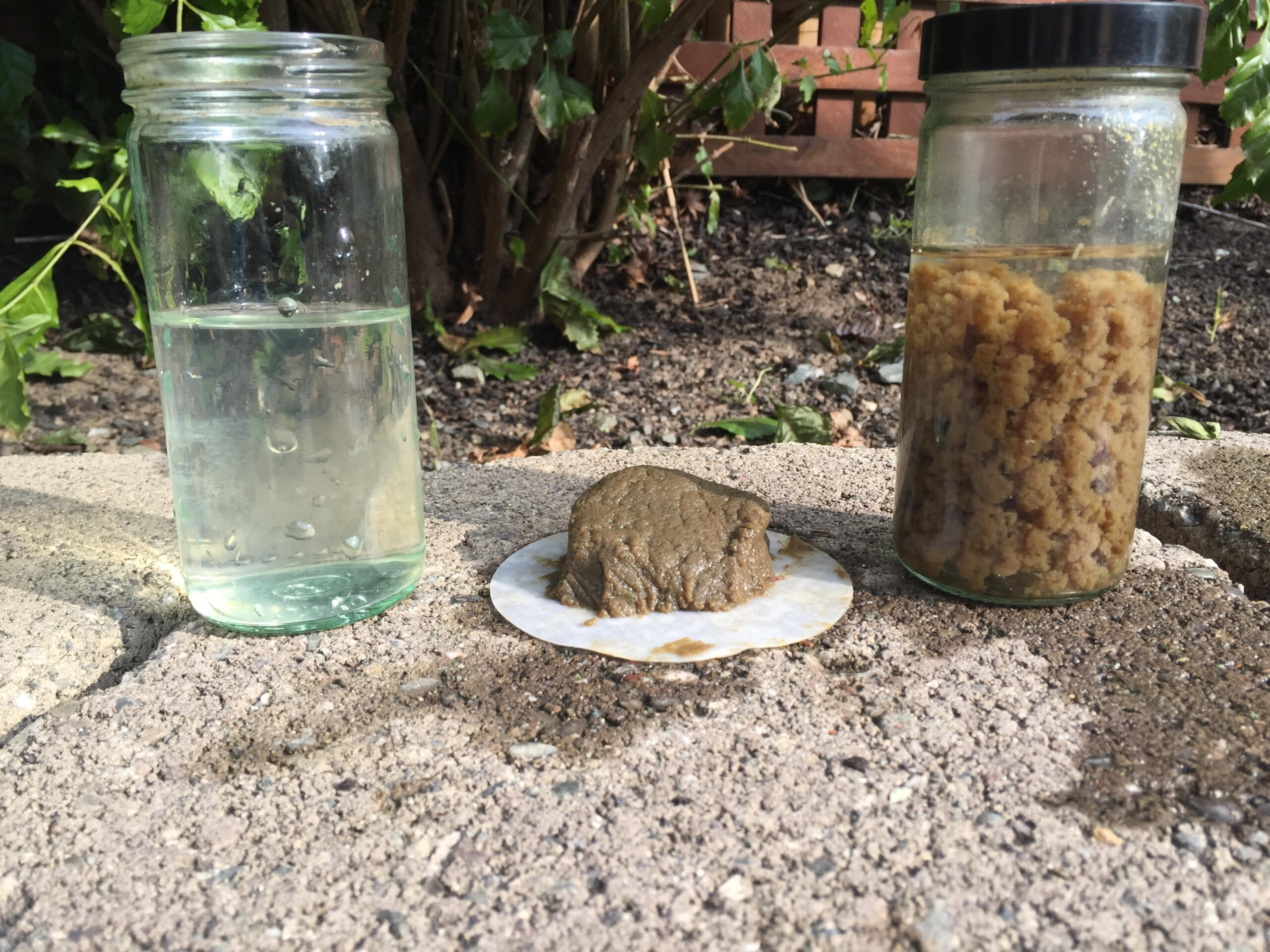
Role of Biofilm and EPS

Microscopic monitoring during the trials revealed two dominant types of microorganisms contributing to sludge bulking: filamentous bacteria and non-filamentous floc-forming microbes. However, what proved most consistent and problematic was not the specific type of organism—but the presence of EPS-rich biofilms.

EPS (Extra Polymeric Substances) are the “glue” that holds biofilms together, composed of complex macromolecules such as polysaccharides, proteins, lipids, and nucleic acids. These substances create protective channels and structures that resist mechanical disruption and chemical penetration. Within this matrix, even healthy floc can be suspended rather than settling, leading to chronic bulking issues. Traditional flocculants and oxidants often fail to fully penetrate this structure, resulting in only short-term fixes or no improvement at all.

This is where hydroxyl radicals, a type of ROS generated by JC-9465, provide a unique advantage. Their high oxidative potential (2.7 eV) allows them to rapidly degrade the molecular bonds in EPS, breaking down the structure from the inside out. This not only eliminates the biofilm but also restores the physical conditions necessary for proper sludge settling.

Case Study: Rosamond CSD Wastewater Treatment Plant

The Rosamond Community Services District, a 2 MGD facility in Southern California, faced severe bulking at the end of summer. Their aerobic digester system—with two 12-foot-deep clarifiers—exhibited a sludge blanket depth of 8–10 feet, indicating major settling issues and threatening compliance limits.

Initial Responses:

  • Increased wasting provided temporary relief but was unsustainable.
  • Bench testing of cationic flocculants showed increased floc size, but settling remained poor.
  • Microscopic analysis revealed no filamentous organisms, only free-swimming ciliates and lagellates.

This scenario reflects a growing trend in wastewater treatment: poor settling even in the absence of filamentous bacteria. Many operators are now discovering that sludge bulking is often driven by organic interference, such as biofilm accumulation and high EPS content—not necessarily microbial type. Unfortunately, traditional detection methods can miss these structural issues, leading to ineffective treatments or misdiagnosed root causes.

Intervention with JC-9465:

After expert consultation, the plant tested JC-9465 at a dosage of 25 mg/L, applied to the RAS line. The impact was swift:

  • Within 48 hours, the sludge blanket depth fell to 4–5 feet.
  • After 4 days, JC-9465 treatment was stopped.
  • The wasting rate was reduced, and operations returned to baseline with no further complications.

Benefits Observed:

  • Reduction in wasting rate and overtime associated with plant conditions
  • Did not have to take the plant off-line
  • Did not require super-chlorination
  • Did not require seeding to repopulate the activated sludge population

How JC-9465 Works

JC-9465 is a mineral oxychloride solution that produces large amounts of hydroxyl radical ions, among the most powerful oxidants used in water treatment. These radicals break molecular bonds within EPS structures, degrading the polysaccharides, lipids, nucleic acids, and proteins that hold the biofilm together.

With an oxidation potential of 2.7 eV, hydroxyl radicals surpass both ozone (2.04 eV) and sodium hypochlorite (1.34 eV) in reactivity. This allows them to initiate fast and irreversible reactions with organic materials, turning complex EPS molecules into simple carbohydrates and dissolved solids. The result is a rapid collapse of biofilm integrity, restoring the natural settling ability of activated sludge.

Sludge bulking is not always the result of filamentous bacterial overgrowth. In many modern wastewater plants, biofilms and EPS accumulation are the hidden causes of poor sludge settling. Traditional treatments may provide temporary relief but often fail to address this core issue.

JC-9465, powered by reactive oxygen species, represents a next-generation solution. It provides fast, targeted action against biofilms without harming essential microbes or requiring aggressive interventions. For operators facing chronic bulking problems, JC-9465 offers an effective, reliable, and process-safe alternative to legacy methods.

If you would like to participate in our research study, please contact us at www.jenfitch.com or email charles@jenfitch.com to discuss the testing protocol and the technology.
1

Mineral oxychloride as an alternative to ClO2 by “ Ms. Emma Flanagan, Envirocleen”

Technical and Operational Superiority of Mineral Oxychloride Reagents Over Chlorine Dioxide for Water Treatment

Abstract

This scientific article presents the technical and operational advantages of mineral oxychloride reagents over chlorine dioxide (ClO₂) in water treatment. Mineral oxychlorides are advanced oxidation agents that deliver superior disinfection, biofilm removal, and residual protection compared to conventional oxidants. By generating highly reactive oxygen species (ROS), including hydroxyl radicals, these reagents offer a safe, energy-efficient, and sustainable alternative that aligns with all 12 principles of green chemistry. While both agents have antimicrobial applications, mineral oxychlorides represent a second-generation advanced oxidation process (AOP) with greater oxidative efficiency and broader reactivity.

Introduction to Mineral Oxychlorides

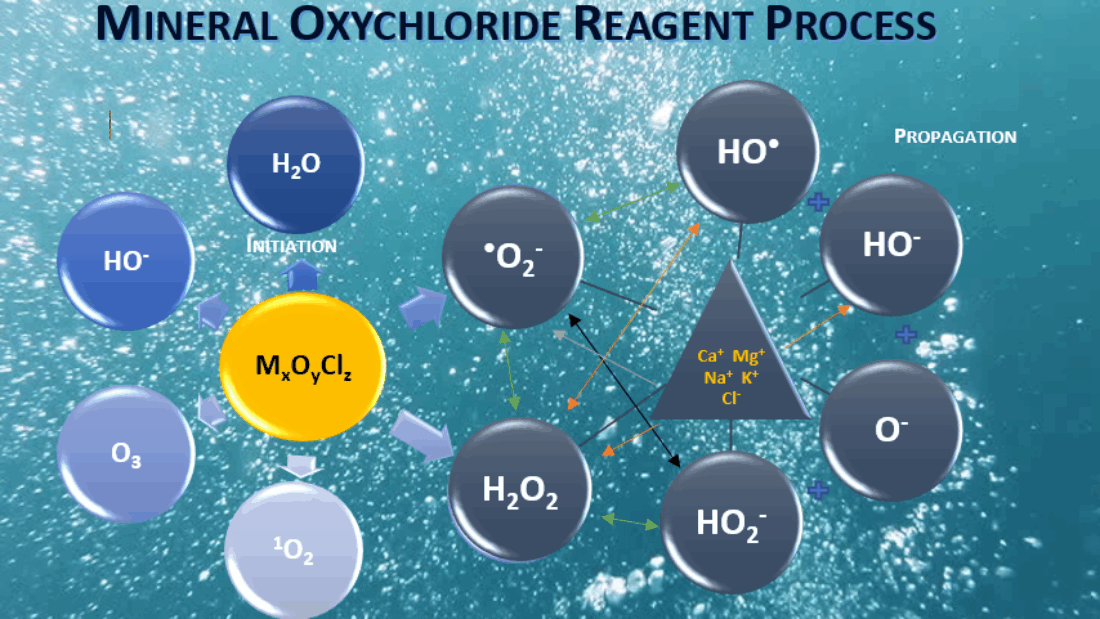
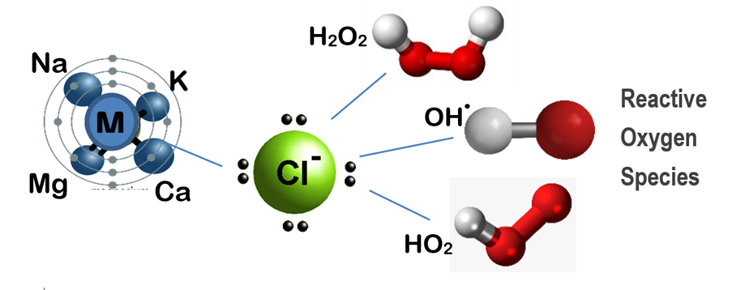
Mineral oxychlorides (MxOyClz) are a class of compounds composed of transition metals bonded to oxygen and chlorine. In aqueous media, these compounds exhibit high photocatalytic activity, primarily through the generation of ROS—especially hydroxyl radicals (OH)—which drive their efficacy as AOP agents. When dissolved in water, mineral oxychlorides initiate highly reactive oxidative pathways without requiring external energy input.

The primary mechanism involves modified Fenton reactions, notably the Haber–Weiss pathway:

Haber–Weiss Reaction
O₂ + H₂O₂ → (metal catalyst) → O₂ + OH + OH⁻

Unlike chlorine dioxide, which engages in selective oxidation of limited contaminants, mineral oxychlorides initiate a cascade of non-selective oxidative species, including:

  • Hydroxyl radicals (OH)
  • Superoxide (O₂)
  • Perhydroxyl radicals (HO₂)
  • Hydrogen peroxide (H₂O₂)
  • Hydroxyl and oxygen ions

These ROS are generated via self-sustaining chain reactions catalyzed by the internal vibrational energy of the mineral components, resulting in a highly efficient, low-energy process.

Mechanism of Action in Water Treatment

Hydroxyl radicals possess an oxidation potential of 2.8–2.9 V, second only to fluorine, but far more practical for water applications. The reagent’s unique catalytic profile ensures continuous in situ ROS generation without external energy input.

Water Activation Pathways:

  1. Dissociation: H₂O + e⁻ → OH + H + e⁻
  2. Excitation: H₂O + e⁻ → H₂O* + e⁻ → H₂O + OH + H
  3. Ionization: H₂O + e⁻ → H₂O⁺ + 2e⁻ → H₃O⁺ + OH

These autocatalytic reactions keep the system active until new contamination is introduced.

Advanced oxidation via mineral oxychlorides rapidly degrades both organic and inorganic pollutants into biodegradable and non-toxic byproducts. Mechanisms include:

  • Hydrogen abstraction
  • Electrophilic substitution
  • Electron transfer

These reactions lead to the formation and subsequent oxidation of carbon-centered radicals, ultimately yielding alcohols, ketones, aldehydes, and complete mineralization to CO₂ and H₂O.

At high redox saturation, hypochlorite ions (OCl⁻) may form and convert into hypochlorous acid (HOCl) in acidic environments. However, ROS remains the dominant active species in these systems.

Key Oxidative Targets:

  • Biofilms: Degraded via oxidative destruction of extracellular polysaccharides
  • Microorganisms: Eliminated through ROS-induced cellular lysis

Organic/Metal Contaminants: Decomposed via rapid electron-transfer reactions

Biocidal Mechanism

Hydroxyl radicals exert powerful oxidative stress on microorganisms by:

  • Attacking unsaturated fatty acids in cell membranes
  • Inducing lipid peroxidation and membrane destabilization
  • Oxidizing proteins and nucleic acids via sulfhydryl and amino acid damage
  • Promoting disulfide cross-links and DNA mutations

This broad-spectrum, multi-target mechanism ensures rapid microbial death, biofilm eradication, and minimal potential for resistance development.

Implementation and Operational Benefits

Historically, AOPs were reserved for high-COD effluents due to cost and complexity. Mineral oxychloride reagents overcome these limitations by offering:

  • Easy-to-use liquid formulation
  • Minimal capital and operating costs
  • No specialized equipment or training
  • NSF and EPA certifications for potable and non-potable use
  • Complete compliance with green chemistry principles
  • Zero formation of regulated DBPs or bromates

The reagent integrates seamlessly with existing chlorinated protocols, enhancing efficiency while reducing chemical demand.

Chemistry of Chlorine Dioxide (ClO₂)

Chlorine dioxide is a dissolved gas produced on-site from sodium chlorite or chlorate. It functions effectively as a selective oxidant with antimicrobial properties, particularly against protozoa and biofilm.

Key Properties:

  • Oxidation Potential: 0.94 V (sodium chlorate), 1.57 V (sodium chlorite)
  • Oxidation Capacity: 5-electron transfer (~263% available chlorine)
  • Selective Reactivity: Targets phenols, sulfides, cyanides, Fe, Mn
  • Low Reactivity Toward: Aromatic and unsaturated bonds
  • Temperature Sensitivity: Degrades rapidly at high temperatures
  • Byproduct Profile: Lower DBP formation than chlorine

Though effective, ClO₂ has limitations in broader oxidation of complex organics and presents handling, storage, and safety challenges due to its gaseous and explosive nature.

Comparison with Chlorine Dioxide (ClO₂)

FeatureChlorine DioxideMineral Oxychloride
Electrochemical Potential0.94–1.57 V2.8–2.9 V
Disinfection SpeedModerateVery Fast
Residual ProtectionLimitedLong-lasting, autocatalytic
Biofilm ControlGood (size-based penetration)Excellent (oxidative destruction)
Byproducts (DBPs)LowNone (breaks down existing DBPs)
Temperature StabilityDegrades at high temperatureStable; reactivity increases
SolubilityGas phase; not fully solubleFully water-soluble
pH Range Effectiveness5–104–10
Hazard & Storage RiskHigh (explosive gas, corrosive)Low (non-flammable, stable)
Green Chemistry ComplianceNoYes (meets all 12 EPA principles)


Operational Advantages of Mineral Oxychloride

  • No on-site gas generation or hazardous storage
  • Stable liquid form with long shelf life
  • Broad-spectrum action with minimal contact time
  • Converts contaminants into biodegradable byproducts
  • Compatible with most treatment protocols
  • May reduce or eliminate use of additional chemicals

Application Areas

Mineral oxychloride reagents are ideal for:

  • Municipal and potable water systems
  • Industrial and cooling water systems
  • Food and beverage sanitation
  • Oil & Gas generation and processing- Biofilm, H2S, FeS, and mercaptans
  • Agriculture & Aquaculture-Pre & Post Harvest disinfection

Approved by the U.S. EPA FIFR as a disinfectant, USDA NOP (National Organic Program), and certified by the NSF Std. 60, these reagents are suitable for both potable and non-potable systems.

Conclusion

Mineral oxychloride reagents represent a significant advancement in water treatment, combining unmatched oxidative potential, environmental safety, and operational simplicity. Compared to chlorine dioxide, they deliver superior disinfection, longer residual protection, and greater degradation of a wide range of contaminants, all without producing hazardous byproducts.

Mineral oxychlorides represent the next generation of water treatment technology, offering superior oxidation strength, safety, and sustainability over chlorine dioxide. As water disinfection and regulatory compliance challenges increase, this reagent provides a cost-effective, eco-friendly, and technically superior alternative for meeting treatment goals.

Contact & Additional Information

For product inquiries, and technical support, contact:

📧 sales@jenfitch.com
🌐 www.jenfitch.com