
shutterstock_114887479

Knocking Down Foam in Wastewater Treatment with JC-9465

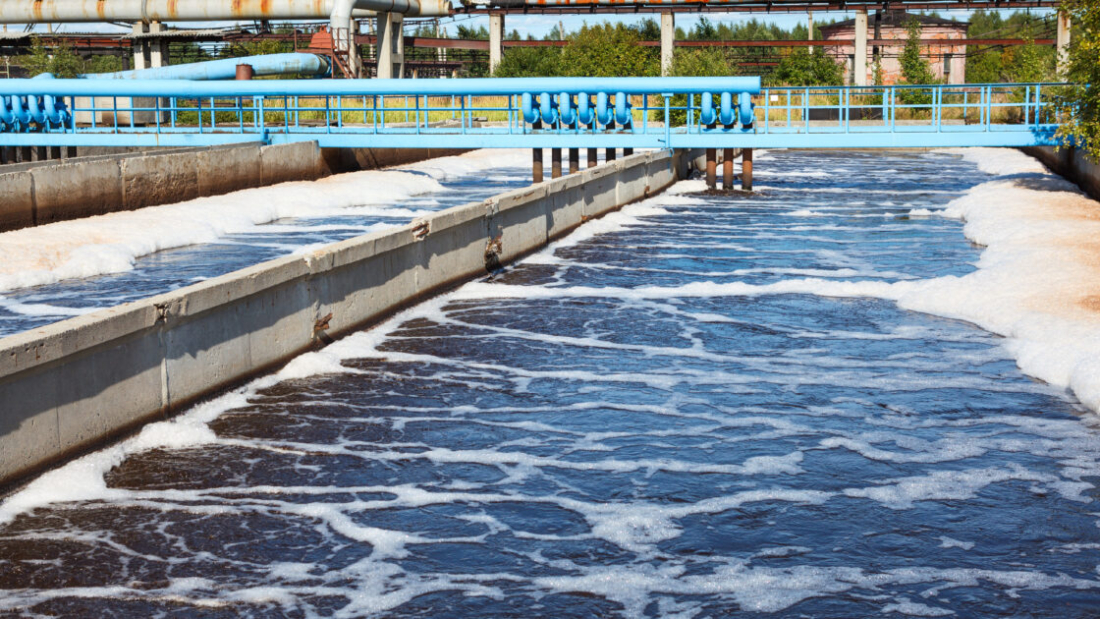
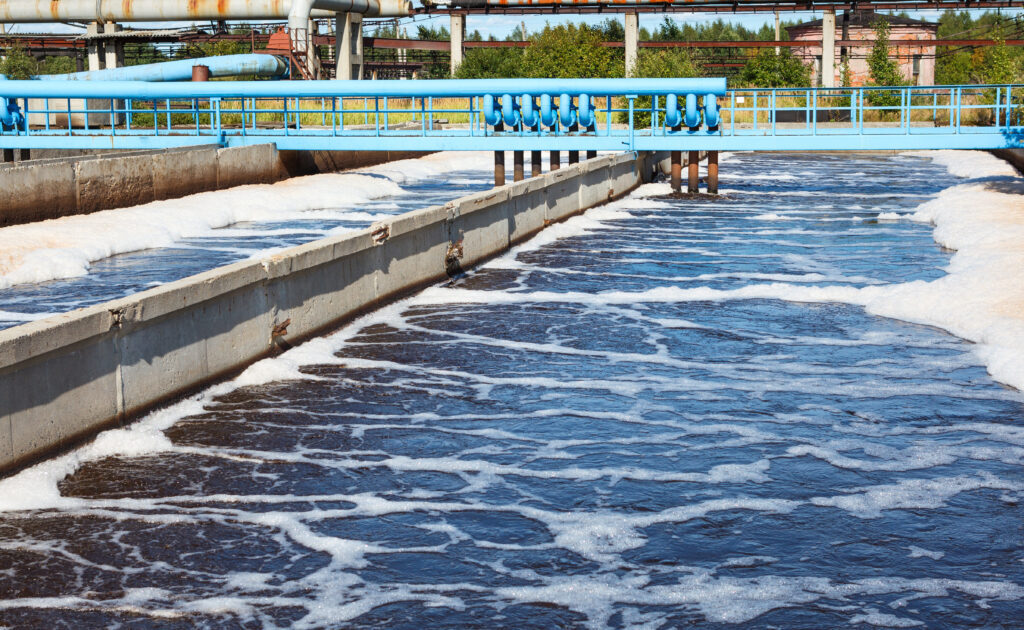
Foam is one of the most frustrating challenges in wastewater treatment operations. While it may seem like just a cosmetic issue, uncontrolled foam can have serious consequences: it carries solids into the effluent, disrupts secondary clarification, creates odor problems, and even poses safety hazards for operators working around basins and tanks. Traditional methods such as water sprays, defoamers, or chlorine dosing provide only short-term relief and often leave operators fighting the same problem week after week.

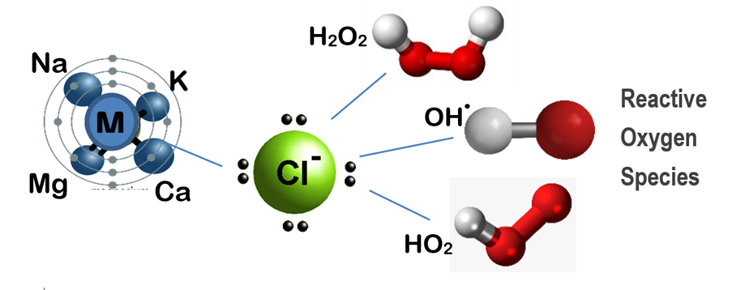
In recent years, operators and engineers have begun to recognize that foam is not just a surface problem. It’s often the result of complex microbial activity and biofilm development within the sludge system. That’s why a chemistry-based approach using Reactive Oxygen Species (ROS), delivered through JC-9465, has gained traction. Unlike surface treatments, JC-9465 directly targets the root causes of foam, making it a much more reliable and long-lasting solution.

Why Foam Happens

Foam usually develops when conditions in the aeration basin favor certain filamentous bacteria like Nocardia or Microthrix parvicella. These organisms thrive under high sludge ages, nutrient imbalances, and elevated grease or surfactant loads. Because of their hydrophobic cell surfaces, they easily trap air bubbles, producing thick, stable foam that resists normal collapse.

Another key contributor is EPS (Extra Polymeric Substances), sticky compounds secreted by bacteria. EPS forms a structural matrix that not only stabilizes biofilms but also makes foam more persistent by binding bubbles together. This is why simple water sprays or even polymers often fail and the foam’s stability is locked into its chemical structure, not just its physical bubbles.

Hidden Costs of Foam

Beyond being unsightly, persistent foam can lead to:

  • Effluent quality issues – foam can carry solids over into the clarifier weirs
  • Pathogen and odor problems – foam layers can harbor bacteria and create foul smells
  • Increased operational effort – constant spraying, chemical dosing, and sludge handling
  • Safety concerns – slippery walkways and overflows near open tanks

Recognizing foam as a process symptom rather than just a nuisance is the first step to controlling it effectively.
How JC-9465 Knocks Down Foam

JC-9465 is a mineral oxychloride solution that generates high levels of hydroxyl radical ions, one of the strongest Reactive Oxygen Species (ROS). These radicals have an oxidation potential of 2.7 eV, much higher than ozone (2.04 eV) or sodium hypochlorite (1.34 eV). This high oxidative energy allows JC-9465 to attack and break down the compounds that make foam so stubborn.

The key lies in how JC-9465 interacts with the EPS matrix and foam-causing organisms:

  1. Disrupting the EPS Matrix
    Hydroxyl radicals target and oxidize the compounds that make up EPS, such as proteins, polysaccharides, lipids, and nucleic acids, breaking the ‘glue’ that holds foam together. Once the structural integrity is gone, the foam quickly collapses.
  2. Selective Action on Filamentous Bacteria
     Unlike chlorine, JC-9465 selectively targets foam-causing filamentous organisms like Nocardia while preserving beneficial floc-forming microbes, maintaining stable sludge performance.
  3. Residual Oxidative Protection
    Beyond immediate knockdown, JC-9465 leaves a residual oxidative effect, helping prevent foam rebound and reducing the need for frequent treatments

Residual Benefits

Another advantage is that JC-9465 doesn’t just provide a quick knockdown; it leaves a residual oxidative effect in the system. This prevents immediate rebound, meaning operators can enjoy longer-lasting control with fewer interventions. In practice, this translates into reduced chemical use, less labor for foam control, and a more stable activated sludge process.

Benefits Compared to Traditional Foam Control

Temporary vs Long-lasting Impacts: Traditional methods of foam control, such as water sprays, defoamers, or chlorination are widely used, but each comes with significant limitations. Water sprays are the simplest and least costly option, but their impact is short-lived. They collapse surface bubbles temporarily, requiring frequent operator attention, and do nothing to address the underlying cause of foam formation.

Solution to Root Cause: Silicone or oil-based defoamers provide a more immediate and dramatic knockdown, but they act only on the surface. Since they don’t penetrate or break down the EPS matrix, they fail to solve the root problem. As a result, foam often returns within hours or days, leading to high recurring chemical costs and dependency on continuous dosing.

Favourable to Beneficial Organisms: Chlorination has long been used to control foaming, especially when filamentous bacteria like Nocardia are identified. While it can reduce microbial populations, chlorination is non-selective and may harm the beneficial floc-forming organisms that are essential for healthy sludge operation. On top of that, chlorine use increases the risk of toxic byproducts such as trihalomethanes (THMs) and chloramines, which can compromise both environmental compliance and safety.

Sustainable Approach: JC-9465, on the other hand, delivers a more effective and sustainable approach. By generating hydroxyl radicals, it directly breaks down the EPS structure that stabilizes foam while selectively reducing foam-causing bacteria. This dual action results in rapid foam knockdown and prevents the rebound that commonly follows conventional methods. Unlike chlorine, it does not disrupt the overall microbial balance, and unlike silicone defoamers, it leaves a residual protective effect that minimizes the need for repeated applications. Over time, this means fewer chemical additions, reduced operator labor, and a more stable biological process.
Case Study: Proven Biofilm and Foam Control with JC-9465

Extensive studies demonstrate the power of JC-9465 in breaking down biofilms and restoring process efficiency. One of the most compelling results comes from the work on controlling Legionella, a pathogen that thrives inside biofilm aggregates.

In these trials, JC-9465 was applied and achieved a 6-log reduction of Legionella in less than 30 seconds. This rapid effectiveness was confirmed through ORP measurements exceeding +680 mV, proving that the hydroxyl radicals generated by JC-9465 were strong enough to penetrate and oxidize the EPS matrix protecting these microbes. Once the EPS was dismantled, the biofilm collapsed and eliminated the safe harbor that allowed Legionella to persist.

The same principle applies in wastewater treatment when controlling persistent foaming issues. Foam, much like biofilm, is stabilized by EPS and the activity of filamentous bacteria. By breaking down EPS and selectively targeting foam-causing organisms, JC-9465 provides fast foam knockdown while preserving the beneficial floc-forming microbes that keep sludge healthy. This is why operators consistently see not only immediate relief, but also longer-lasting stability compared to traditional defoamers or chlorination.

Conclusion

Foam control in wastewater treatment is far more than a surface issue. It’s a process stability challenge rooted in microbial activity and biofilm formation. While traditional approaches such as spraying, defoamers, or chlorine dosing provide short-term relief, they fail to address the underlying causes and often lead to recurring problems, higher costs, and process disruptions.

JC-9465 offers a proven, chemistry-driven solution by generating hydroxyl radicals that break down the EPS matrix and selectively target foam-causing organisms. This not only delivers rapid knockdown but also ensures longer-lasting control without harming beneficial microbes. As demonstrated in real-world applications, JC-9465 allows operators to regain control of their systems, reduce chemical and labor dependency, and maintain consistent effluent quality.

Therefore, sustainable foam control starts with addressing the root cause. With JC-9465, wastewater operators can shift from reactive, temporary fixes to a proactive, reliable solution that supports long-term plant performance and compliance.
image

Goleta Water District ‐ Full Scale Plant Testing of Jenfitch JC9450

Executive Summary


The Goleta Water District (GWD) is currently in compliance with all State and Federal drinking water
quality standards, including the four-quarter Locational Running Annual Average (LRAA) total
trihalomethanes (TTHM) standard of 80 micrograms per liter (μg/L).

Water quality has been declining in Lake Cachuma, GWD’s surface water supply, as a result of drought
and wildfire impacts to its watershed. Increasing levels of organic matter are anticipated to exceed
GWD’s current treatment capabilities persist at high levels into the foreseeable future. Accordingly,
one of the District’s top priorities is to maintain water quality, specifically to upgrade treatment to
reduce organic matter and reduce the formation of THMs in the Corona Del Mar Water Treatment Plant
(CDMWTP) treated water and in the distribution system.

This proposed plan serves to notify the California State Water Resources Control Board Division of
Drinking Water of GWD’s intent to perform a full-scale plant test at CDMWTP of JC9450 as an alternative
to sodium hypochlorite, with the goal of reducing THM formation. Manufactured by Jenfitch, LLC,
JC9450 is a proprietary, NSF 61-approved water treatment chemical with properties similar to chlorine.
Jenfitch NSF-approved products have been used for a number of water quality improvements by other
water treatment plants, including Stenner Surface Water Treatment Plant (SSWTP) in San Luis Obispo,
California and the City of Martinez Water Treatment Plant in Martinez, California.

Jar testing of JC9450 was performed by GWD staff in October 2017 to simulate CDMWTP treatment
processes. GWD observed a 95% reduction of TTHM and a 21% reduction in the seven-day TTHM
formation level in samples that were treated with a low dose of JC9450 as an oxidizing agent in lieu of
sodium hypochlorite. Sodium hypochlorite was still used as the disinfectant.

Based on these promising results of the jar testing, GWD proposes a limited duration, low throughput,
full scale plant test of JC9450. In addition to being NSF 61 approved, the JC9450 chemical has been used
successfully at SSWTP and other plants, with one adverse impact reported: a turbidity increase at the
filters, which was overcome by renewing the adsorption capacity of the filters. GWD is heeding the
lesson of SSWTP’s experience by proposing to super-chlorinate the filters in advance of the CDMWTP
full-scale test.

A preliminary full scale plant test of up to two weeks’ duration is tentatively scheduled for January 2018.
The test will allow GWD to evaluate the efficacy of JC9450 to reduce THM levels and formation potential
and to monitor impacts to CDMWTP processes. During this test, GWD expects to operate CDMWTP at
approximately three million gallons per day (MGD) throughput. GWD also anticipates meeting the
balance of customer demand in the distribution system via groundwater production.

Full-scale plant testing will be conducted with extensive process monitoring, cooperation from the
chemical manufacturer, and routine plant sampling and monitoring by GWD Operators. If the initial twoweek test shows promising results and no adverse impacts, the District expects to prepare for an
additional full-scale testing of up to three months to allow for more comprehensive testing while
primarily on surface water. During this longer full-scale plant test, groundwater production may be suspended, and water quality changes will be monitored within CDMWTP and throughout the
distribution over a longer period to evaluate the suitability of JC9450 as a long-term treatment solution
for reducing THM formation.

To read the complete study, Click Here

1

Mineral oxychloride as an alternative to ClO2 by “ Ms. Emma Flanagan, Envirocleen”

Technical and Operational Superiority of Mineral Oxychloride Reagents Over Chlorine Dioxide for Water Treatment

Abstract

This scientific article presents the technical and operational advantages of mineral oxychloride reagents over chlorine dioxide (ClO₂) in water treatment. Mineral oxychlorides are advanced oxidation agents that deliver superior disinfection, biofilm removal, and residual protection compared to conventional oxidants. By generating highly reactive oxygen species (ROS), including hydroxyl radicals, these reagents offer a safe, energy-efficient, and sustainable alternative that aligns with all 12 principles of green chemistry. While both agents have antimicrobial applications, mineral oxychlorides represent a second-generation advanced oxidation process (AOP) with greater oxidative efficiency and broader reactivity.

Introduction to Mineral Oxychlorides

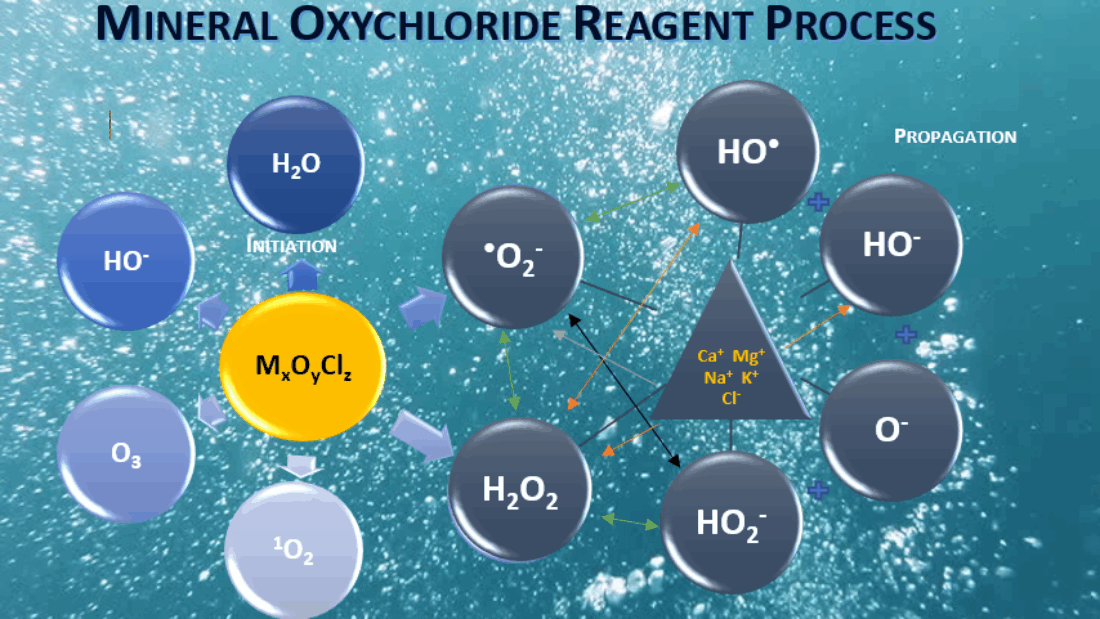
Mineral oxychlorides (MxOyClz) are a class of compounds composed of transition metals bonded to oxygen and chlorine. In aqueous media, these compounds exhibit high photocatalytic activity, primarily through the generation of ROS—especially hydroxyl radicals (OH)—which drive their efficacy as AOP agents. When dissolved in water, mineral oxychlorides initiate highly reactive oxidative pathways without requiring external energy input.

The primary mechanism involves modified Fenton reactions, notably the Haber–Weiss pathway:

Haber–Weiss Reaction
O₂ + H₂O₂ → (metal catalyst) → O₂ + OH + OH⁻

Unlike chlorine dioxide, which engages in selective oxidation of limited contaminants, mineral oxychlorides initiate a cascade of non-selective oxidative species, including:

  • Hydroxyl radicals (OH)
  • Superoxide (O₂)
  • Perhydroxyl radicals (HO₂)
  • Hydrogen peroxide (H₂O₂)
  • Hydroxyl and oxygen ions

These ROS are generated via self-sustaining chain reactions catalyzed by the internal vibrational energy of the mineral components, resulting in a highly efficient, low-energy process.

Mechanism of Action in Water Treatment

Hydroxyl radicals possess an oxidation potential of 2.8–2.9 V, second only to fluorine, but far more practical for water applications. The reagent’s unique catalytic profile ensures continuous in situ ROS generation without external energy input.

Water Activation Pathways:

  1. Dissociation: H₂O + e⁻ → OH + H + e⁻
  2. Excitation: H₂O + e⁻ → H₂O* + e⁻ → H₂O + OH + H
  3. Ionization: H₂O + e⁻ → H₂O⁺ + 2e⁻ → H₃O⁺ + OH

These autocatalytic reactions keep the system active until new contamination is introduced.

Advanced oxidation via mineral oxychlorides rapidly degrades both organic and inorganic pollutants into biodegradable and non-toxic byproducts. Mechanisms include:

  • Hydrogen abstraction
  • Electrophilic substitution
  • Electron transfer

These reactions lead to the formation and subsequent oxidation of carbon-centered radicals, ultimately yielding alcohols, ketones, aldehydes, and complete mineralization to CO₂ and H₂O.

At high redox saturation, hypochlorite ions (OCl⁻) may form and convert into hypochlorous acid (HOCl) in acidic environments. However, ROS remains the dominant active species in these systems.

Key Oxidative Targets:

  • Biofilms: Degraded via oxidative destruction of extracellular polysaccharides
  • Microorganisms: Eliminated through ROS-induced cellular lysis

Organic/Metal Contaminants: Decomposed via rapid electron-transfer reactions

Biocidal Mechanism

Hydroxyl radicals exert powerful oxidative stress on microorganisms by:

  • Attacking unsaturated fatty acids in cell membranes
  • Inducing lipid peroxidation and membrane destabilization
  • Oxidizing proteins and nucleic acids via sulfhydryl and amino acid damage
  • Promoting disulfide cross-links and DNA mutations

This broad-spectrum, multi-target mechanism ensures rapid microbial death, biofilm eradication, and minimal potential for resistance development.

Implementation and Operational Benefits

Historically, AOPs were reserved for high-COD effluents due to cost and complexity. Mineral oxychloride reagents overcome these limitations by offering:

  • Easy-to-use liquid formulation
  • Minimal capital and operating costs
  • No specialized equipment or training
  • NSF and EPA certifications for potable and non-potable use
  • Complete compliance with green chemistry principles
  • Zero formation of regulated DBPs or bromates

The reagent integrates seamlessly with existing chlorinated protocols, enhancing efficiency while reducing chemical demand.

Chemistry of Chlorine Dioxide (ClO₂)

Chlorine dioxide is a dissolved gas produced on-site from sodium chlorite or chlorate. It functions effectively as a selective oxidant with antimicrobial properties, particularly against protozoa and biofilm.

Key Properties:

  • Oxidation Potential: 0.94 V (sodium chlorate), 1.57 V (sodium chlorite)
  • Oxidation Capacity: 5-electron transfer (~263% available chlorine)
  • Selective Reactivity: Targets phenols, sulfides, cyanides, Fe, Mn
  • Low Reactivity Toward: Aromatic and unsaturated bonds
  • Temperature Sensitivity: Degrades rapidly at high temperatures
  • Byproduct Profile: Lower DBP formation than chlorine

Though effective, ClO₂ has limitations in broader oxidation of complex organics and presents handling, storage, and safety challenges due to its gaseous and explosive nature.

Comparison with Chlorine Dioxide (ClO₂)

FeatureChlorine DioxideMineral Oxychloride
Electrochemical Potential0.94–1.57 V2.8–2.9 V
Disinfection SpeedModerateVery Fast
Residual ProtectionLimitedLong-lasting, autocatalytic
Biofilm ControlGood (size-based penetration)Excellent (oxidative destruction)
Byproducts (DBPs)LowNone (breaks down existing DBPs)
Temperature StabilityDegrades at high temperatureStable; reactivity increases
SolubilityGas phase; not fully solubleFully water-soluble
pH Range Effectiveness5–104–10
Hazard & Storage RiskHigh (explosive gas, corrosive)Low (non-flammable, stable)
Green Chemistry ComplianceNoYes (meets all 12 EPA principles)


Operational Advantages of Mineral Oxychloride

  • No on-site gas generation or hazardous storage
  • Stable liquid form with long shelf life
  • Broad-spectrum action with minimal contact time
  • Converts contaminants into biodegradable byproducts
  • Compatible with most treatment protocols
  • May reduce or eliminate use of additional chemicals

Application Areas

Mineral oxychloride reagents are ideal for:

  • Municipal and potable water systems
  • Industrial and cooling water systems
  • Food and beverage sanitation
  • Oil & Gas generation and processing- Biofilm, H2S, FeS, and mercaptans
  • Agriculture & Aquaculture-Pre & Post Harvest disinfection

Approved by the U.S. EPA FIFR as a disinfectant, USDA NOP (National Organic Program), and certified by the NSF Std. 60, these reagents are suitable for both potable and non-potable systems.

Conclusion

Mineral oxychloride reagents represent a significant advancement in water treatment, combining unmatched oxidative potential, environmental safety, and operational simplicity. Compared to chlorine dioxide, they deliver superior disinfection, longer residual protection, and greater degradation of a wide range of contaminants, all without producing hazardous byproducts.

Mineral oxychlorides represent the next generation of water treatment technology, offering superior oxidation strength, safety, and sustainability over chlorine dioxide. As water disinfection and regulatory compliance challenges increase, this reagent provides a cost-effective, eco-friendly, and technically superior alternative for meeting treatment goals.

Contact & Additional Information

For product inquiries, and technical support, contact:

📧 sales@jenfitch.com
🌐 www.jenfitch.com