Where PAA fits
Single-pass sanitizing and effluent disinfection, where fast action and quick decay matter more than a lasting residual. It is also the familiar default in many food plants, with many registered products and a well-understood cost.

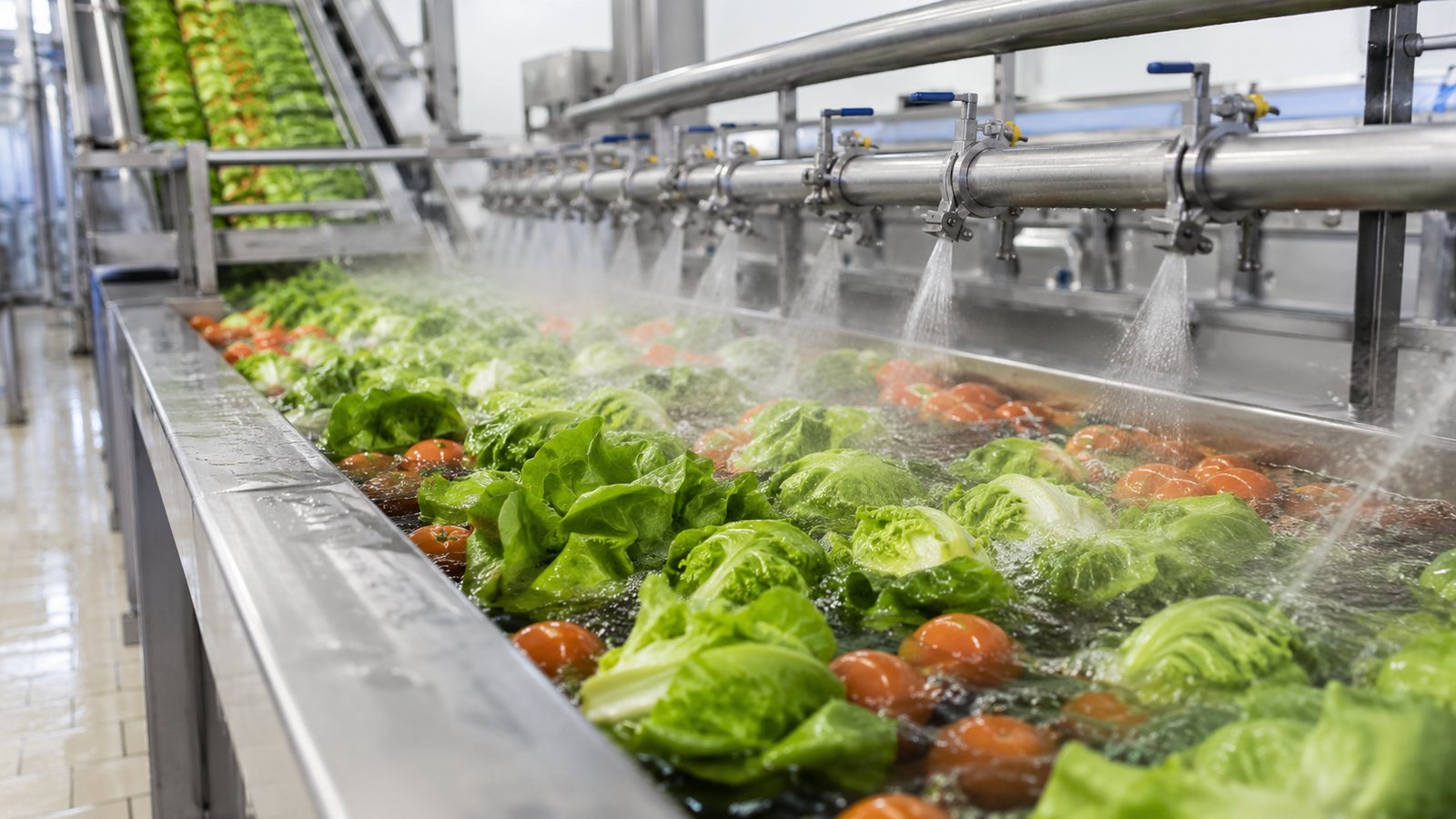
Two non-halogen oxidizers that work differently. Mineral oxychloride oxidizes at 2.8–2.9 V and holds a measurable ORP residual, while peracetic acid acts fast and breaks down to acetic acid, oxygen and water.
Mineral oxychloride oxidizes at an effective 2.8 to 2.9 V against about 1.81 V for peracetic acid, and it is dosed to an ORP setpoint that leaves a measurable residual. Peracetic acid acts fast, breaks down to acetic acid, oxygen and water, costs about the same as hypochlorite, and suits single-pass sanitizing and effluent disinfection.
Approved, certified & independently validated
 EPA FIFRA
 USDA NOP
 NSF/ANSI
Side by Side
Short answer: mineral oxychloride oxidizes at an effective 2.8–2.9 V against about 1.81 V for peracetic acid (PAA). It is dosed to an ORP setpoint and leaves a measurable residual. PAA breaks down quickly to acetic acid, oxygen and water, costs about the same as hypochlorite, and is already the established sanitizer in many food plants.
| Criterion | Mineral oxychloride (JC 9465 / 9450) | Peracetic acid (PAA) |
|---|---|---|
| Oxidation potential (V) | 2.8–2.9 (effective) | 1.81 |
| Active chemistry | Reactive oxygen species released from a mineral–oxygen complex | Peroxyacid in equilibrium with hydrogen peroxide and acetic acid |
| Breakdown products | Mildly biocidal mineral oxides, below FDA limits | Acetic acid, oxygen and water |
| Halogenated by-products | No chlorinated DBPs added | None — not a halogen |
| Residual | Measurable ORP residual that resists recontamination | Short-lived; most disinfection happens in the first 10–15 minutes |
| Effective pH | 4–9 | Best at about 5–8 |
| Control method | ORP (mV) on a controller, tied to kill efficacy | PAA test strips, titration, meters or continuous probes |
| Handling | Ready-to-use liquid; corrosive undiluted; will freeze | Pungent concentrate; irritant to eyes, skin and airways; hazmat transport in bulk |
| Cost | Higher unit price, offset in part by low dose | Comparable to hypochlorite |
| Track record | Specialty chemistry with field and university studies | Widely used in food processing and wastewater disinfection |
| Approvals | JC 9465 EPA FIFRA registered and allowed for organic production under USDA NOP (WSDA-listed); JC 9465 and JC 9450 NSF/ANSI/CAN 60 certified | Many EPA-registered products; permitted uses vary by product label |
Why the Gap
Both are non-halogen oxidizers, and both are used to replace or supplement chlorine. The difference lies in what each one delivers to the water and how long it stays there.
PAA is a strong oxidant, stronger than every form of chlorine, at about 1.81 V. In water it releases hydroperoxyl and hydroxyl radicals that break down cell walls. Mineral oxychloride releases a broader family of reactive oxygen species: superoxide, the hydroxyl radical, singlet oxygen, hydroperoxyl and peroxide. Together they give an effective potential of 2.8–2.9 V. In practice, that shows up as kill time at a given ORP. Held at +700 mV, JC 9465 gave a 6-log reduction in under 10 seconds against E. coli and Listeria in UC Davis post-harvest work. Against a heavy Salmonella challenge it gave a 6.60-log reduction at 2 ppm in 30 minutes.
PAA is designed to act fast and disappear. Most of its disinfection happens in the first 10–15 minutes, and in EPA’s wastewater fact sheet a 5 ppm dose fell to 0.42 ppm by the outfall. That suits a discharge, but it is a weakness in a recirculating flume, a hydro-cooler or a cooling loop, where water keeps picking up new contamination. Mineral oxychloride leaves mildly biocidal mineral-oxide by-products and a measurable ORP residual, so protection continues between doses and can be confirmed on a meter.
PAA breaks down to acetic acid, oxygen and water, which is one of its main attractions. The acetic acid is biodegradable organic carbon, which matters little at discharge but can feed microbes in a recirculating system once the oxidant is spent. Mineral oxychloride leaves mineral oxides that remain below FDA limits. It does not add chlorinated disinfection by-products, and it breaks down organics that would otherwise form them.
PAA is measured as a concentration, with strips, titration or a dedicated probe. Mineral oxychloride is controlled by ORP: +650 to +750 mV for an in-field or post-harvest disinfection barrier. Concentrated PAA has a sharp vinegar odor and irritates the eyes, skin and airways. Mineral oxychloride has no vapor problem, but it is corrosive undiluted, will freeze, and calls for rubber gloves and a face shield.
Fair Comparison
Short answer: choose PAA when you want an oxidant that is gone by the time the water leaves, when a validated PAA sanitation program is already in place, or when a specific labeled food-contact use calls for it. It is a proven, competitively priced chemistry.
By Application
Short answer: the deciding question is whether the water is used once or recirculated. PAA suits single-pass uses and discharges. Mineral oxychloride suits recirculating systems and biofilm-prone surfaces, where a residual and a stronger oxidant make the difference.
| Application | Usually favors | Why |
|---|---|---|
| Wastewater effluent disinfection | PAA | Fast kill, rapid decay and a low residual at the outfall |
| Single-pass produce spray or rinse | Either | Short contact. Price, labeled use and existing procedures decide |
| Recirculated dump tanks, flumes and hydro-coolers | Mineral oxychloride | Organic load builds through the shift; an ORP-controlled residual follows demand |
| Cooling towers and process loops | Mineral oxychloride | Needs a lasting residual and biofilm removal; acetic acid adds carbon to the loop |
| Irrigation water | Either | PAA adds no sodium or chloride to the soil; JC 9465 is allowed for organic production under USDA NOP (WSDA-listed) |
| Established biofilm in lines and tanks | Mineral oxychloride | Run at 600–800 mV to oxidize the EPS matrix, then return to a maintenance band |
Single-pass sanitizing and effluent disinfection, where fast action and quick decay matter more than a lasting residual. It is also the familiar default in many food plants, with many registered products and a well-understood cost.
Recirculating water that keeps picking up load, such as dump tanks, flumes, hydro-coolers and ice, along with cooling loops and biofilm-prone lines. In these systems a measurable ORP residual, higher oxidation potential and one control number pay off. A peer-reviewed green-apple study of JC 9450 tested this cross-contamination failure mode directly.
If you need a sanitizer that acts and disappears, PAA is a sound, economical choice. If you need protection that persists in recirculating water and reaches biofilm, mineral oxychloride is the stronger fit. It offers higher oxidation potential (2.8–2.9 V) and an ORP residual you can read on a meter, at a higher unit price. Biofilm-grown Listeria and Salmonella can survive 6-minute treatments with hypochlorite, PAA and peroxide sanitizers, so whichever you choose, verify it on your own surfaces. For cooling service, see chlorine alternatives for cooling towers.
Frequently Asked Questions
By oxidation potential, yes. Mineral oxychloride has an effective potential of 2.8 to 2.9 V, against about 1.81 V for peracetic acid. Both are stronger than chlorine. Potential is not the whole story: contact time, pH, organic load and residual also decide field results, so compare them on your own water at the setpoint you intend to run before switching.
Mineral oxychloride. PAA is designed to act quickly and decay, with most of its disinfection in the first 10 to 15 minutes, which suits effluent discharge. Mineral oxychloride leaves mildly biocidal mineral-oxide by-products and a measurable ORP residual that resists recontamination. That residual matters most in recirculating water such as flumes, hydro-coolers and cooling loops, where new contamination keeps arriving.
It can where the label covers the use. JC 9465 is EPA FIFRA registered, allowed for organic production under USDA NOP (WSDA-listed), and its labeled uses include post-harvest facility processing. For a disinfection barrier, Jenfitch targets +650 to +750 mV ORP. Run a side-by-side trial on your own wash water, update your sanitation procedures, and confirm the change with your auditor before switching.
Do not mix them in a tank or feed line. Jenfitch's handling guidance for its mineral oxychloride says to avoid mixing it with acids or other oxidizers, and PAA concentrate is both. If you are changing over, empty and flush the feed equipment between chemistries. If a process uses both, keep them at separate stages with their own pumps, and plan the sequence with your chemical suppliers.
PAA is measured as a concentration, using test strips, a titration kit, a handheld meter or a continuous PAA probe. Mineral oxychloride is controlled by oxidation-reduction potential in millivolts, which reads the oxidizing condition of the water directly and can drive a metering pump through a controller. Either way, log the readings with your microbiological results so the setpoint can be defended.
It helps, especially as a cleaning step. PAA is used to strip biofilms from food-contact surfaces, but biofilm-grown organisms are much harder to kill than free-floating ones. Jenfitch's biofilm guide notes that biofilm-grown Listeria and Salmonella can survive 6-minute treatments with hypochlorite, PAA and peroxide sanitizers. Mineral oxychloride targets the EPS matrix at 600 to 800 mV. Physical cleaning still matters for either chemistry.