
Screenshot 2025-04-16 110335

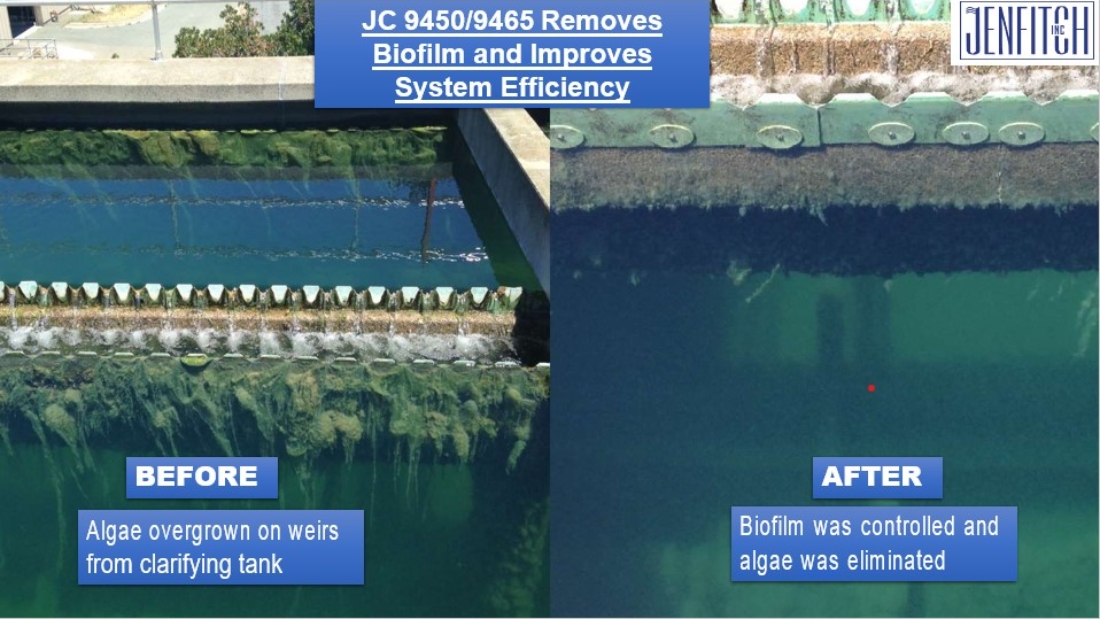
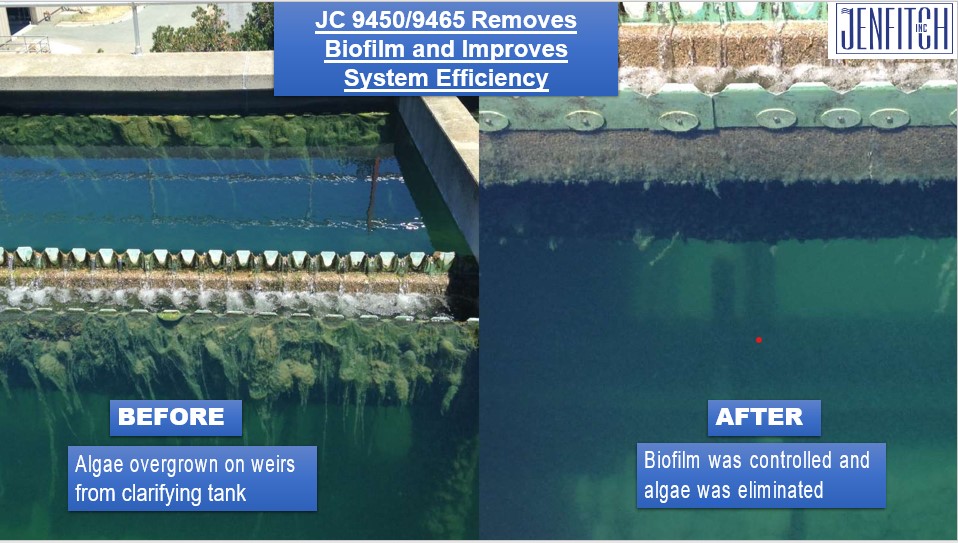
How JC 9450/9465 Removes Biofilm and Improves System Efficiency

Company History & Development

  • Jenfitch, Inc. was formed in 2008 to manufacturer and market water treatment chemicals
  • JC 9450 is a new strong oxidizer, based around the research on mineral oxychloride chemistry that was first developed in the early 1900’s. In the late 20th Century, tools to measure this technology became commercially available and JC 9450 was commercially available from 2013 for: proof of concept studies, plant trials, and laboratory studies and is currently in the marketplace.
  • Mr. Charles Jennings, owner & General Manager, is leading the research teams and marketing teams to develop JC 9450

JC 9450 – New Oxidant

JC 9450 is a new oxidative technology for generating reactive oxygen species (ROS) that simulate an advance oxidation process (AOP) as a tool to measure disinfection effectiveness in water treatment solutions.
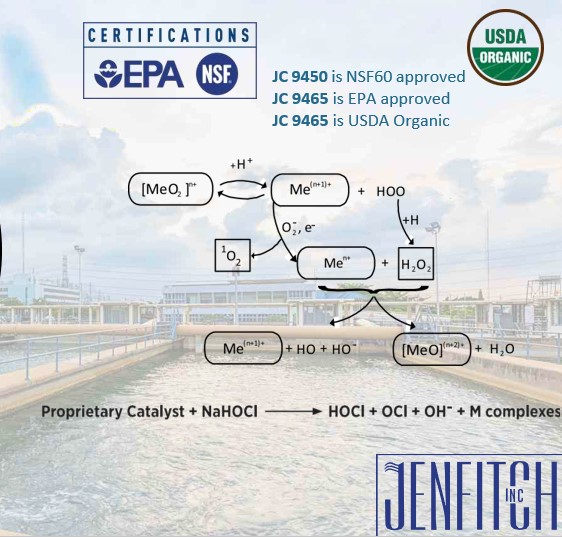
In the past water treatment professionals have been looking for ways to provide safe drinking water effectively

What does JC 9450 offer?

Today the World Health Organization recommends that water is safe at an ORP greater than +750mV

The laws currently being written recommend the use of Langlier Index (LI) to monitor corrosion and water quality using Oxidation Reduction Potential (ORP) as a way of maintaining safe water standards.

Current EPA guidelines are being discussed to include ORP measurement (as mV) and LI as a matrix for water quality control.

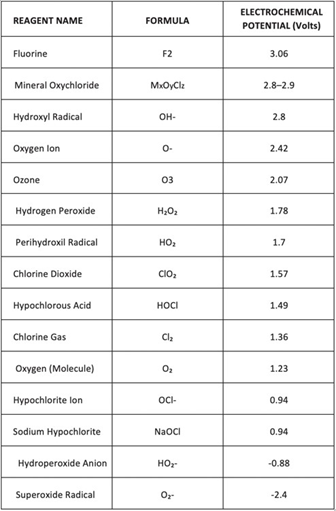
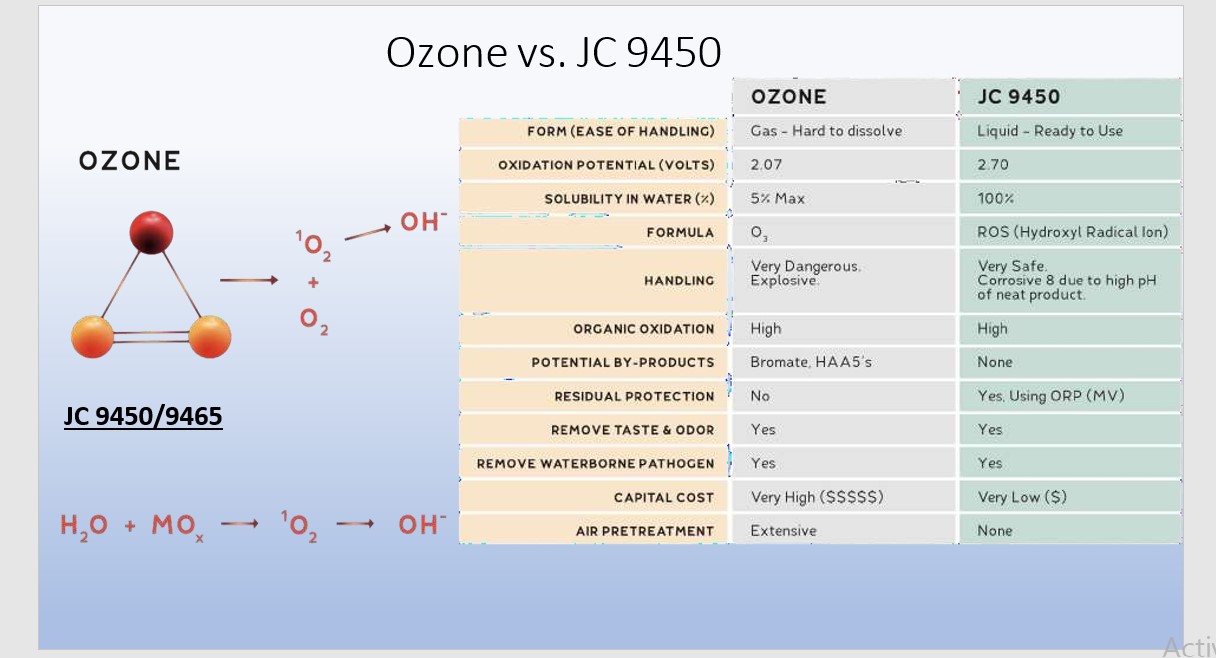
JC 9450 is a low-cost producer of hydroxyl radical ions. JC 9450 is a very strong oxidant with a high concentration of oxidative energy; and it has a higher electronic footprint (Ev) vs a chemical footprint that other oxidants.
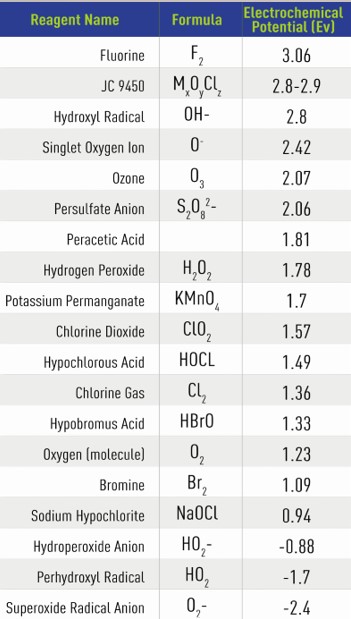
Electrochemical Potential (Ev)
a measurement of oxidative energy

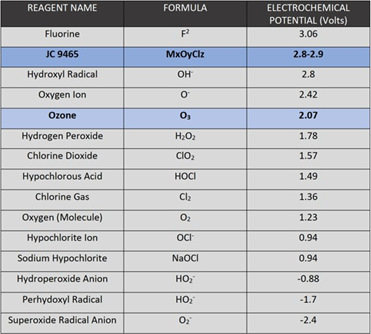
JC 9450 is 2.8 to 2.9 Ev

Ozone is 2.07 Ev

Sodium Hypochlorite is 0.94 Ev

Chlorine Dioxide is 1.57 Ev

Chlorine Gas is 1.36 Ev

Why is ORP Important to Disinfection
Measures energy available for disinfection

Measures contact time required for disinfection

Optimizing treatment based on system demand
This chart is based on using free available chlorine as a benchmark and reflects only a 4-log reduction vs time

JC 9450/9465 vs Chlorine

  • JC 9450 can achieve a six-log reduction in less than 10 seconds @ 700+ mV or higher
  • JC 9450 outperforms chlorine at a lower dosage (using ORP and dosage as measurement)
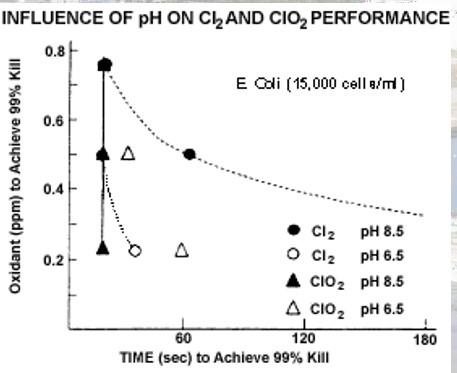
  • JC 9450 is not pH dependent, and has a higher ORP going beyond Chlorine (equivalent dosages)

Takes too long to kill pathogens Requires more chlorine for less results Is an explosive gas and corrosive
Handling Properties of JC 9450/9465

  • Liquid requires rubber gloves, face shield, shirt with sleeves
  • Corrosive in undiluted form, will freeze
  • Six Month Shelf-life vs 30 day for NaHOCL

Installation

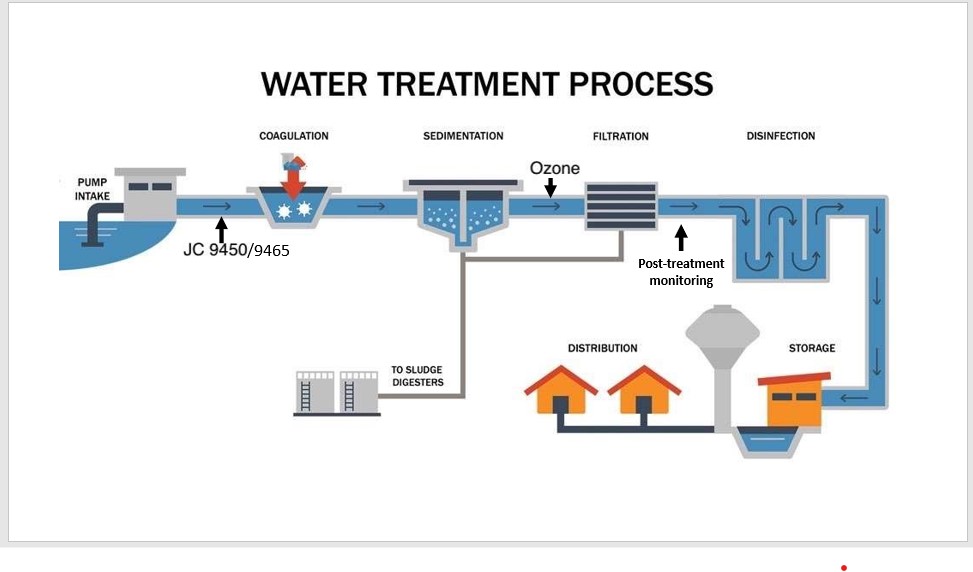
Installation of this technology takes less than 30 minutes and requires no additional equipment

  • Simple to use and monitor
  • Low capital investment
  • Easy installation and used in multiple applications in the water treatment facility
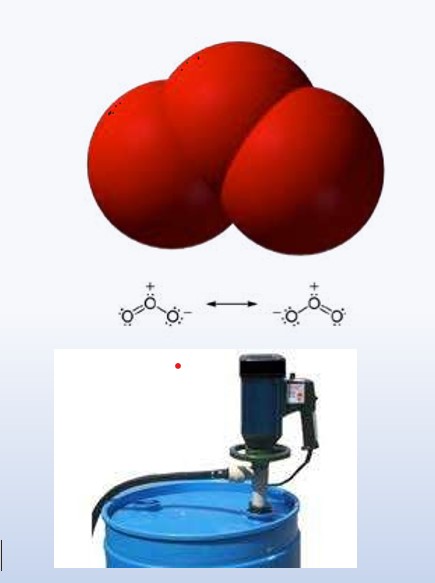
Metering pump & drum at injection
site regular containment

Let’s get started

  • Plant trials partnerships
    • Municipal Water Treatment Pilot
    • Wastewater Treatment Pilots
    • Desalination Studies
    • Water Recycle and Reuse Projects
  • Pilot Studies partnership
    • Controlling Biofilm in the distribution system
    • Lowering or reducing the formation of TTHM’s and HAA5’s
    • Lowering or reducing iron and manganese
    • Lowering or eliminating Taste and Odor complaints
    • Eliminating the influence of zebra mussels
  • Earning Contact Time (CT) Credit as a primary disinfectant

Summary

  • We want to run more pilot studies in water systems impacted by THM’s and HAA5’s
  • We are looking for water plants with T & O complaints
  • We want to demonstrate biofilm removal
  • We want to do a study on removal Zebra Mussels
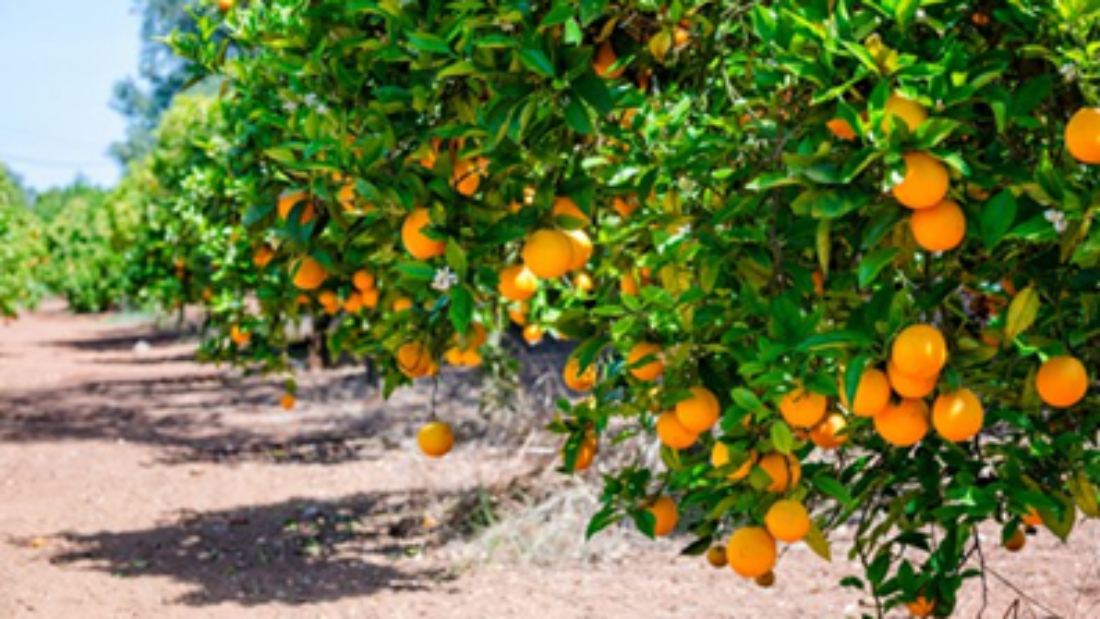
image-11

Citrus Greening Controlled With ROS

Since 2019 over 75% of the citrus crops (oranges 75% and grapefruit 85%) has been lost due to an

infectious bacterium called huanglongbing (HLB) commonly known as “citrus greening”. Leaves of newly affected trees developed blotchy mottle appearance and the fruit is of no value-it has limited use in juicing operation. As of today, there has not being a commercially available solution to this problem except removing trees and re- planting several seasons later.

In 2015 to now, Jenfitch, Inc. (Walnut Creek, CA) has been working with GreenAgri Solutions, LLC (Springhill, FL) to develop a treatment for “citrus greening” that was recently registered with EPA (2020) and USDA Organic certified (2021). GreenAgri Solutions, LLC started testing in central Florida by treating one tree with a new oxidant developed from a mineral oxychloride formulation. They sprayed the leaves and watered the roots with a mineral oxychloride solution that generated an oxidized water having an ORP (oxidation-reduction potential) greater than +700 mV. They removed all the infected leaves. After a week, they started seeing a new “flush” on the infected tree. Then they expanded the test site to 20 trees. After 60 days of irrigating and spraying the trees with a +700 mV solution of the mineral oxychloride solution, all the trees in the test started to develop marketable fruit. The trial is now in its fourth year and has been expanded to two acres (one acre is the control site and the second acre is the treated site). Below is the initial study data:

Mineral oxychloride technology is a source of oxygen energy that is effective against 99.99% of all

Chart No. 1 – Electrochemical Potential

bacteria and viruses. Mineral oxychloride chemistry generates oxidative energy that is related to “reactive oxygen species – ROS” and it can be measured in millivolts using an ORP meter. Mineral oxychloride generates a high concentration of hydroxyl radical ions and other oxygen species that kill microorganisms in less than 10 seconds. In a study conducted at UC Davis-Post Harvest Dept, they concurred that raising the ORP to +700 mV inactivated E. coli, Salmonella, and Listeria in less than 10 seconds. In the Chart No. 1, we compare the electrochemical potential of each oxidizer.

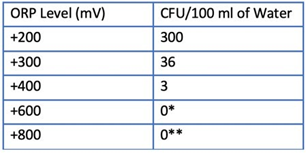
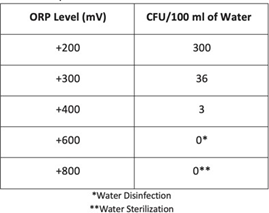
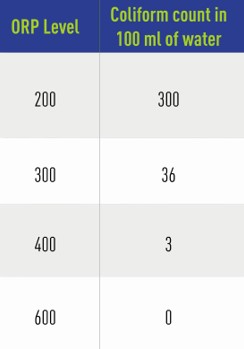
Studies after studies have agreed that finding a low-cost method of raising the oxidative energy of water can lower the impact of microorganisms in agriculture. Chart No. 2 indicates that raising the ORP level inactivate microorganisms (measured as colony forming

Chart No. 2 – Power of Oxidative Energy

unit-CFU). What Chart No. 2 does not explain is how quickly the entire reaction occurs. Mineral oxychloride offers a residual than can be measured using ORP and can be used a method to insure proper control.

For more information about our studies using mineral oxychloride technology please contact us at charles@jenfitch.com or www. Jenfitch.com or call 925-289-3559.

jenfitch-inc-logo-300x137 (2)

Press release on JC 9465 getting approved by EPA and USDA Organic Program.

Jenfitch, Inc. has gained US Environmental Protection Agency (EPA FIFRA) and USDA Organic Standard (7 CFR Part 205) approval to use its’ proprietary sodium oxychloride formulation, JC 9465, that works even more effectively than ozone as a crop production aid, disease, and pest control aid, fertilizer and soil amendment aid, livestock production aid and processing and

handing aid for facilities requiring organically approved technologies. JC 9465 has improved safety and increased production in various agricultural applications that use post-harvest wash systems and hydro-coolers to control cross-contamination and spoilage. The capital cost for installation and operating cost are less than at 1% of the cost of a conventional ozone system. In aquaculture systems from Norway to Louisiana, JC 9465 has improved yields and lowered operating costs. Currently in studies from Canada, the dairy industry has been conducting studies using JC 9465 to control hoof disease and other health-related problems for dairy cows with great success.

Walnut Creek, CA.-based Jenfitch, Inc. is marketing its JC 9465 ROS as an alternative to gaseous ozone, sodium hypochlorite, chlorine, and chlorine dioxide to help meet food safety needs in the 21st Century

In studies using JC 9465, we have observed an increase in the availability of singlet oxygen ions and

hydroxyl radical ions which have been called ‘Nature’s detergents. They effectively destroy all microorganisms found in post-harvest applications in less than 30 seconds”, Marketing Manager, Gail Jennings, said in a recent news release. In independent studies using ORP, (Oxidation-Reduction Potential) by increasing the ORP (as measured in millivolts) stress is introduced to the microorganisms and inactivates them. (See chart to right)

JC 9465 has been shown to be 12 to 24 times more effective than chlorine as a disinfectant for controlling biofilms, bacteria, viruses, and spores. Studies have demonstrated that bacteria living in a biofilm causes

spoilage. JC 9465 oxidizes the biofilms and attacks the bacteria. JC 9465 is a member of the reactive oxygen species (ROS) in the chart to the right, we list the various oxygen species. The important points of the chart are the different electrochemical potentials (voltage-Ev) of each ROS molecule. Ozone is 2.04, singlet oxygen ions is 2.42, hydroxyl radical ions is 2.8, while chlorine ions is 1.49, and JC 9465 is 2.8 Ev. Understanding electrochemical potential helps us understand why ozone react quickly in water vs chlorine and why singlet oxygen ions/hydroxyl radical ions work even better than ozone.

In a field study conducted with UC Davis-Post Harvest Dept., JC 9465 effectively achieved a 6-log (CFU) reduction in less than 10 seconds on E. coli, Listeria, and Salmonella. Also, in a study with the University of Washington Agriculture-Post Harvest Dept, JC 9465 demonstrated that it can eliminate cross-contamination during apple harvesting.

JC 9465 is composed of a solution of hypochlorous acid and a proprietary catalyst that controls the activation of the singlet oxygen ion and hydroxyl radical ion. Unlike sodium hypochlorite which is a gas in a liquid, the singlet oxygen ion and hydroxyl radical ion are highly soluble in water and can be used in varying water qualities (i.e., pH and temperatures) effectively. JC 9465 works like a Trojan Horse. It easily passes through the cell membrane as an oxygen molecule and then converts to ROS which attacks the nucleus of the cell. Killing it instantly. Sodium hypochlorite requires a minimum of 2-4 minutes of contact time at a very high concentration to achieve the same results as JC 9465.

JC 9465 is also approved for use in potable water treatment system up to 84 mg/l as an oxidant. It is approved to control scaling and corrosion and can be used to treat groundwater high in iron and manganese.

For a copy of relevant studies and more information on the new sodium oxychloride chemistry, please visit www.jenfitch.com or contact sales@jenfitch.com or call 925-289-3559.