Biofilms, colonies of microbial cells and the extracellular polymers they produce, are a critical but often underestimated factor in industrial water treatment. JC 9465 is an advanced oxidizing biocide and biodispersant engineered to control them where chlorine alone fails.
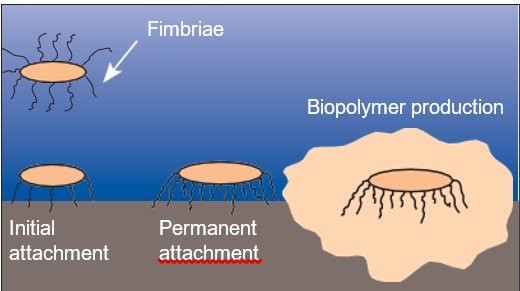
What is a biofilm?
A biofilm comprises microbial cells (algal, fungal, or bacterial) and the extracellular biopolymer they produce. Bacterial biofilms present the greatest concern for industrial cooling water systems because they require minimal nutrients to grow.
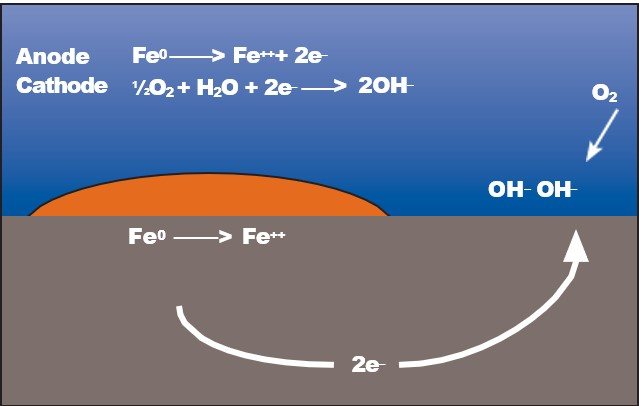
What problems do biofilms cause?
- Reduced heat transfer efficiency
- Equipment fouling
- Corrosion acceleration
- Scale formation
- Blockage of flow in cooling tower fill areas
Thermal conductivity comparison
Biofilm insulates heat exchange surfaces far more than mineral scale. Its thermal conductivity is only 0.6 W m⁻¹ K⁻¹, compared with CaCO₃ at 2.6 and CaSO₄ at 2.3.
Biofilm's thermal conductivity is just 0.6 W m⁻¹ K⁻¹, compared with 2.6 for CaCO₃ and 2.3 for CaSO₄ scale.
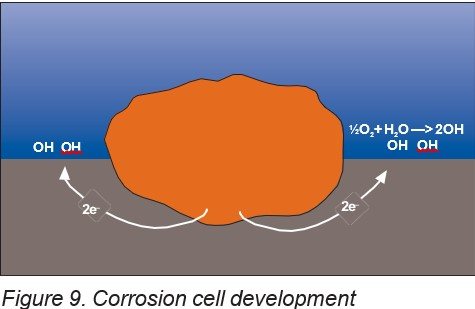
Control methods
- Oxidizing microbiocides such as chlorine, bromine, peracetic acid, and ozone
- Nonoxidizing microbiocides such as polyquats and others
- Biodispersants and enzyme technologies
JC 9465 specifications
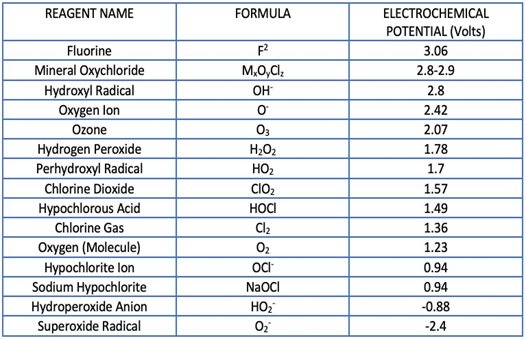
JC 9465 is an advanced oxidizing biocide with a superior electrochemical oxidation potential (volts, standard electrode potential):
- JC 9465: 2.8–2.9 V
- Ozone: 2.07 V
- Chlorine gas: 1.36 V
- Sodium hypochlorite: 0.94 V
The product has proven effective across paper, cooling water, food and beverage, utilities, and oil and gas applications where chlorine alone failed.
Why does chlorine fail against established biofilm?
Free chlorine is a perfectly capable disinfectant in bulk water. The problem is that a mature biofilm is not bulk water. The extracellular polymeric substance (EPS) the colony secretes is a hydrated gel that consumes oxidant at its surface, so the chlorine is spent long before it reaches the cells anchored to the metal underneath. Operators see the symptom constantly: residual holds at the setpoint in the basin, plate counts look acceptable, and the heat exchanger keeps losing approach temperature anyway.
Raising the chlorine residual to force penetration trades one problem for another. Higher free chlorine attacks tower fill, gaskets, and mild steel, drives up halogen demand, and increases the corrosion rate on the same surfaces the program is supposed to protect. Mineral oxychloride takes a different route. It carries an oxidation potential of 2.8–2.9 V — second only to fluorine at 3.06 V, and on par with the hydroxyl radical at 2.80 V — and it delivers that potential as a family of reactive oxygen species rather than as a single halogen. Superoxide, hydroxyl radical, singlet oxygen, hydroperoxyl, and peroxide each attack different bonds in the EPS matrix, which is why the film disperses instead of merely being disinfected on its outer face.
Where does mineral oxychloride rank among oxidants?
| Oxidant | Oxidation potential (V) |
|---|---|
| Fluorine | 3.06 |
| JC 9465 mineral oxychloride | 2.8–2.9 |
| Hydroxyl radical | 2.80 |
| Ozone | 2.07 |
| Chlorine dioxide | 1.57 |
| Chlorine gas | 1.36 |
| Sodium hypochlorite | 0.94 |
In cooling-tower service that difference has been measured as roughly 12 to 24 times the effectiveness of chlorine. It is also the reason a single product can do the work that would otherwise be split between an oxidising biocide, a non-oxidising biocide on alternating slug doses, and a separate biodispersant. Our side-by-side comparison with chlorine and the comparison with ozone set out the operating and capital differences in more detail.
What does biofilm cost a cooling system?
The thermal argument is the one that gets a plant manager's attention. A biofilm layer is about 300% worse for heat transfer than an equivalent thickness of calcium carbonate scale — thermal conductivity of roughly 0.6 W m⁻¹ K⁻¹ against 2.6 for CaCO₃ and 2.3 for CaSO₄. A film thin enough that an operator would not notice it on an inspection can therefore cost more approach temperature than visible scale.
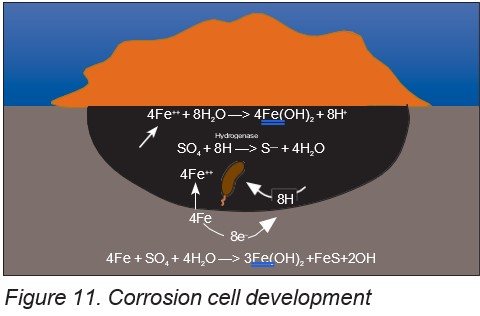
That penalty shows up on the electricity bill. Southern California Edison has documented electricity savings of 20% or more where cooling-system fouling is properly controlled, because the chiller no longer has to compensate for degraded heat transfer. Underneath the film there is a second cost: microbiologically influenced corrosion. Sulfate-reducing bacteria sheltering in the anaerobic zone at the metal surface drive the pitting that eventually takes a condenser tube out of service, and no amount of bulk-water residual reaches them while the EPS is intact.
The third cost is the one nobody wants to discuss in a meeting. Biofilm is the reservoir that protects Legionella pneumophila from a conventional halogen program. Testing at Special Pathogen Laboratory in Pennsylvania recorded a 6-log Legionella reduction in under 10 seconds at an ORP above +700 mV — see the Legionella field results and our note on breaking the transmission chain.
Dosing and ORP control in a cooling loop
JC 9465 is dosed to an oxidation-reduction potential setpoint, not to a fixed ppm. ORP measures how much oxidising work the water can actually do, so it accounts for organic load, makeup-water quality, and cycles of concentration automatically — a fixed ppm does not. The ORP reference chart gives the full set of process targets.
| Objective | Target ORP |
|---|---|
| Routine cooling-tower control (biofilm & MIC) | 400–500 mV |
| Active biofilm / EPS destruction | 600–800 mV |
| RO pre- and post-treatment | 500–650 mV |
| Disinfection | 650–750 mV |
| Sterilization | +800 mV |
A typical program runs the loop at 400–500 mV for routine control and steps up to the 600–800 mV band for a cleanup pass on a system that already has an established film. The working pH range is 4–9, which covers essentially every open recirculating tower. Installation is straightforward: a metering pump, a storage tank, and an optional ORP controller, typically commissioned in under 30 minutes. As a rule of thumb for pathogen control, 1.0 mg/L of product treats 1,000–10,000 mg/L of organism load; for inorganic demand the ratio is under 1.0 mg/L per 1.0 mg/L of contaminant.
JC 9465 is EPA FIFRA registered as a biocide and algaecide. The same mineral oxychloride chemistry is certified to NSF/ANSI/CAN Standard 60 for drinking-water treatment as both JC 9465 and JC 9450, at a maximum dose of 84 mg/L. For the wider industrial picture, see Industrial & Cooling Towers and the related work on removing biofilm and controlling filamentous growth.
Frequently asked questions
Does JC 9465 replace both the biocide and the biodispersant?
In most open recirculating systems, yes. Mineral oxychloride oxidises the extracellular polymer that holds the film together while simultaneously killing the organisms inside it, so a separate dispersant slug is usually unnecessary. Systems with heavy process contamination or unusual organic loading should still be bench tested first.
What ORP should a cooling tower run at?
400 to 500 mV for routine biofilm and MIC control. For a cleanup pass on a system with an established film, run 600 to 800 mV until the film releases, then drop back to the maintenance band. ORP works as the control variable because it reflects the oxidising power actually present in the loop, so a controller can hold the band automatically instead of relying on a fixed feed rate that drifts with load and blowdown.
Will it damage tower fill, gaskets, or mild steel?
The program is run at a controlled ORP setpoint rather than at an elevated halogen residual, so it does not require the high free-chlorine levels that attack fill and elastomers. The effective pH range is 4 to 9. As with any oxidant program, verify material compatibility for your specific system before start-up.
How long does installation take?
A typical install is under 30 minutes. It consists of a metering pump, a storage tank, and an optional ORP controller tied to the existing loop. Because the chemistry arrives as a ready-to-use liquid, there is no gas generator to install and no change to the cooling tower itself, so the work is limited to mounting the pump, siting the tank, and setting an injection point on piping that is already there.
Is JC 9465 registered for cooling-tower use?
JC 9465 is EPA FIFRA registered as a biocide and algaecide. The same chemistry is certified to NSF/ANSI/CAN Standard 60 for drinking-water treatment as both JC 9465 and JC 9450, to a maximum dose of 84 mg/L. The two product codes are the same mineral oxychloride chemistry carried on different registration paths, so the choice between them follows from which approval an application needs rather than from any difference in the liquid itself.
Have a water challenge like this?
Talk to Jenfitch about JC 9465, safety data sheets, or scoping a treatment program for your facility.